Olin Hall
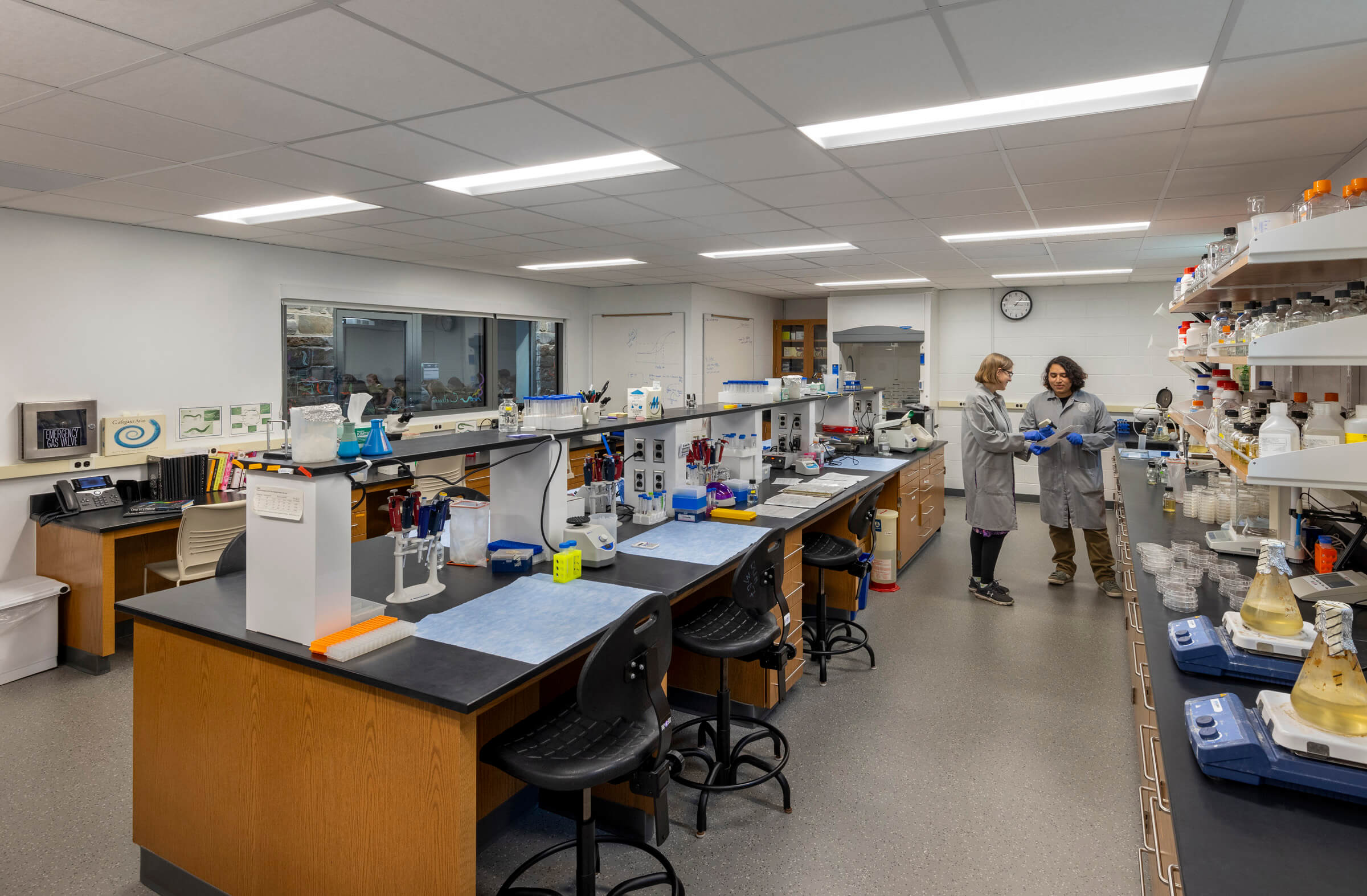
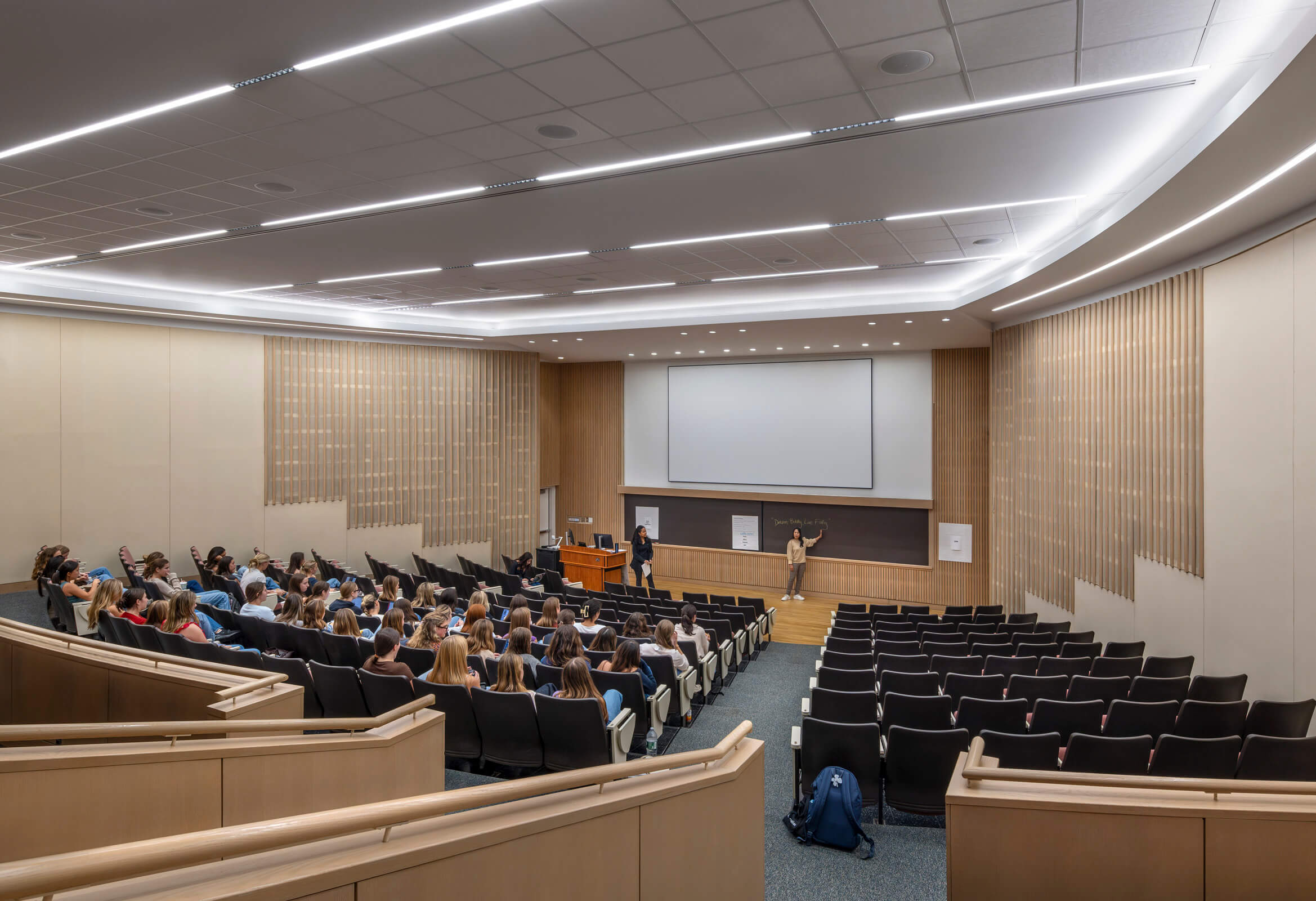
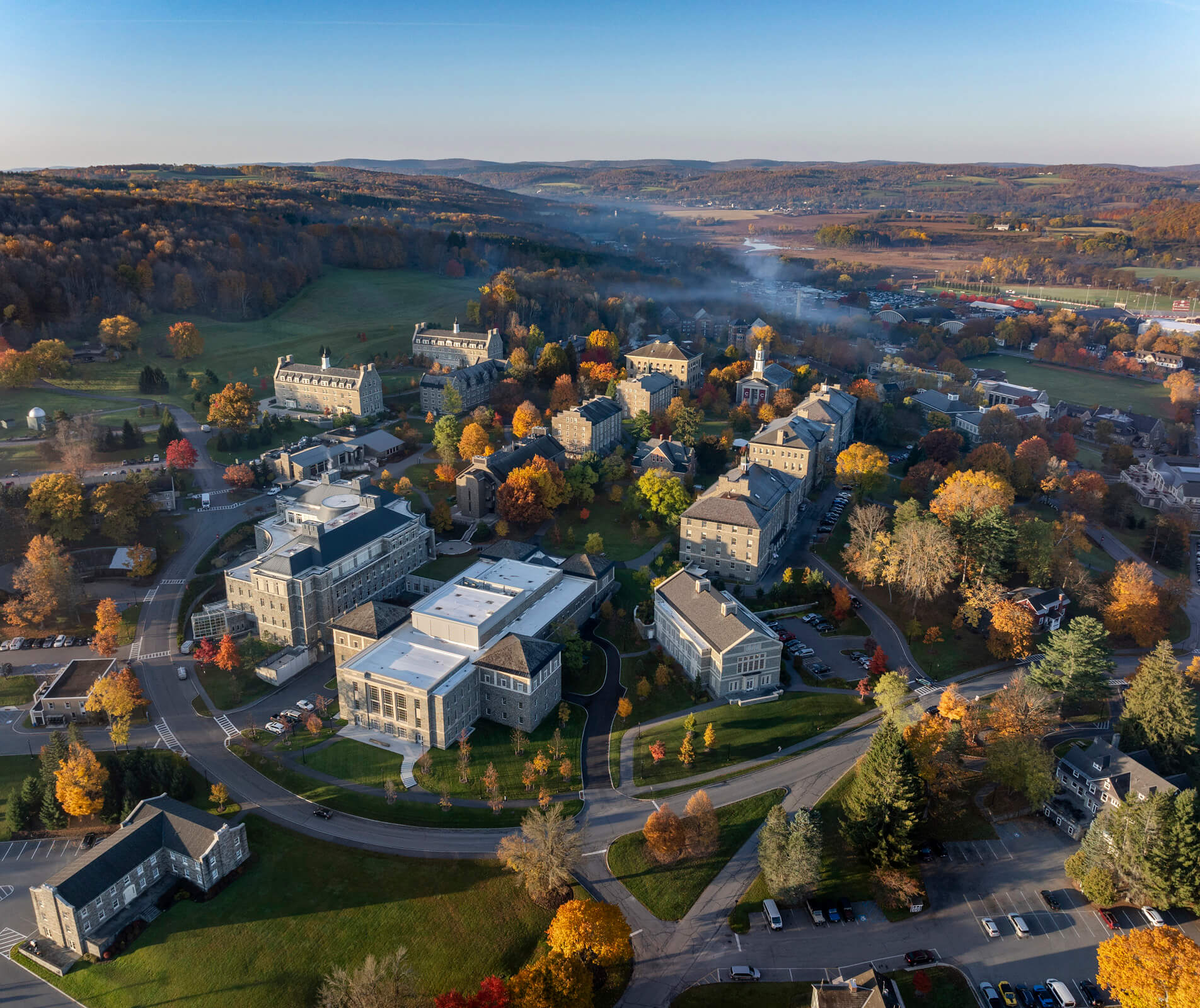
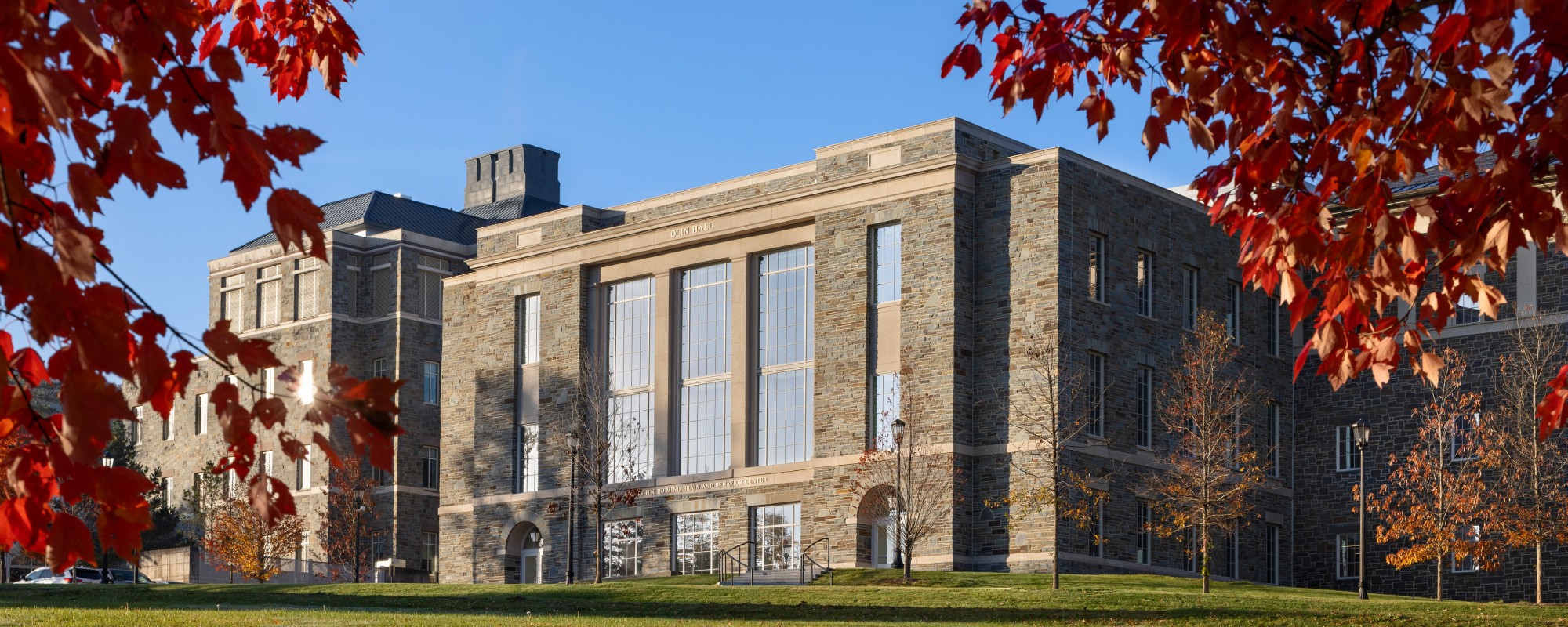
Olin Hall, Colgate University’s largest academic building, has been transformed into a state-of-the-art interdisciplinary facility that expands and upgrades the learning environment for the university’s life sciences programming. Established in 1971, Olin Hall has undergone a series of incremental upgrades over the years but required a comprehensive, building-wide update. As part of Colgate’s Third Century Plan, the re-imagined building adds approximately 20,000 square feet of new space while uniting modern laboratories, adaptable classrooms and offices, and common spaces.
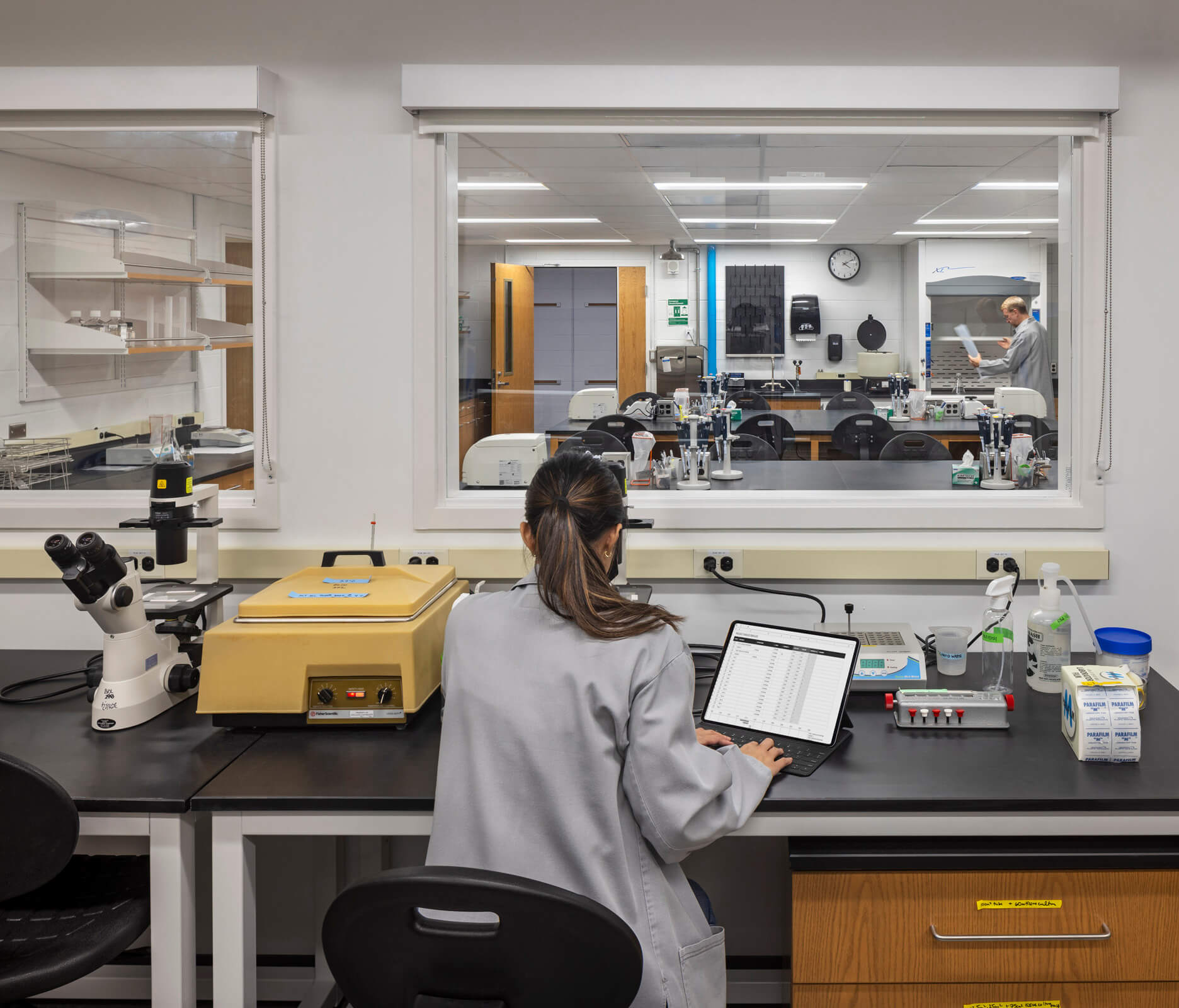
At the heart of the redesign is an expanded floorplan made possible by relocating the original mechanical room—which once occupied a central floor—to a new penthouse at the back of the building. The former service area has been converted into classrooms, labs, and gathering areas that create opportunities for spontaneous interaction and interdisciplinary collaboration. Constrictive hallways ending in closed doors and private rooms have been replaced with a more functional circulation route, linked by daylit spaces, to increase transparency, bring users together, and highlight ongoing research.
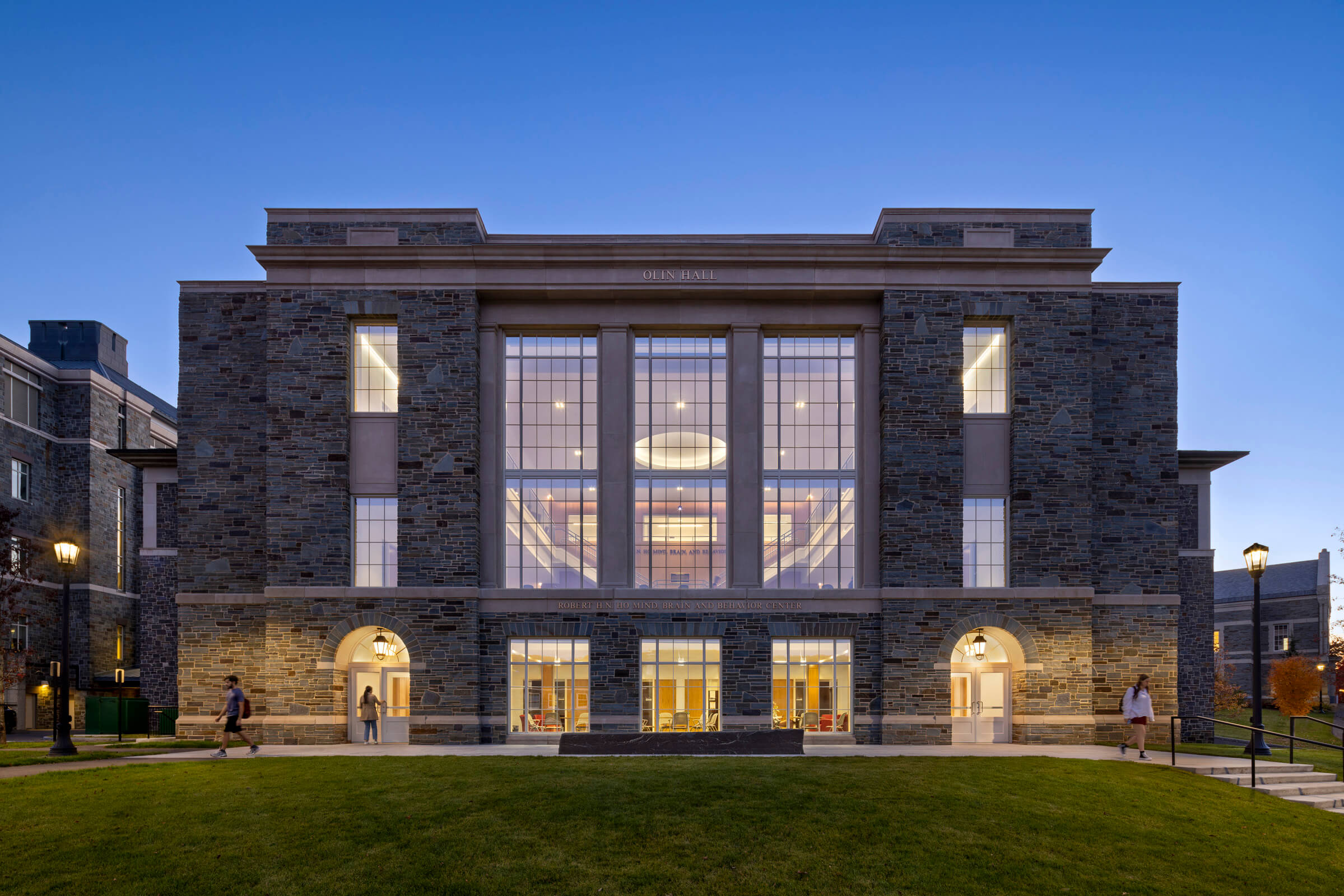
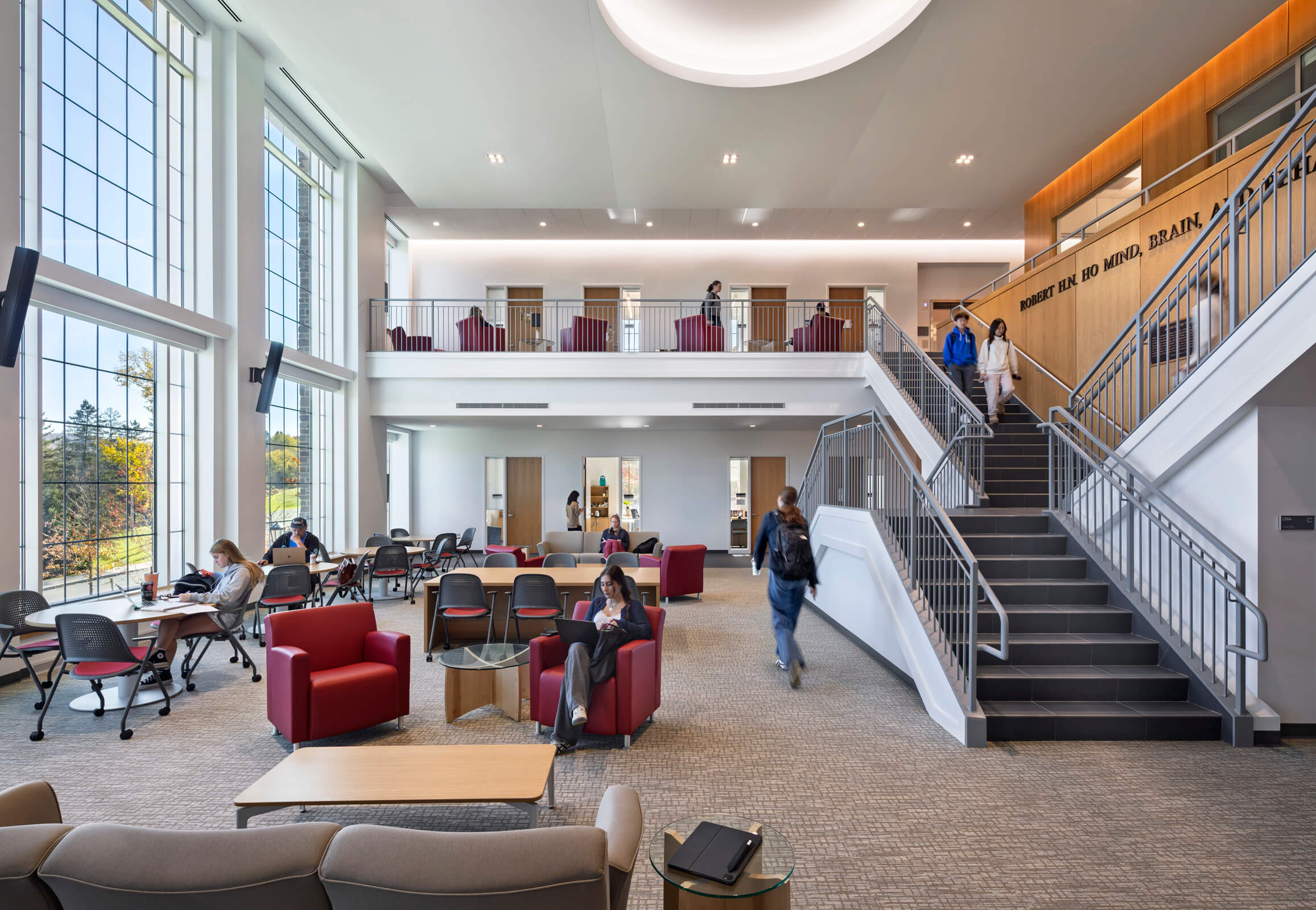
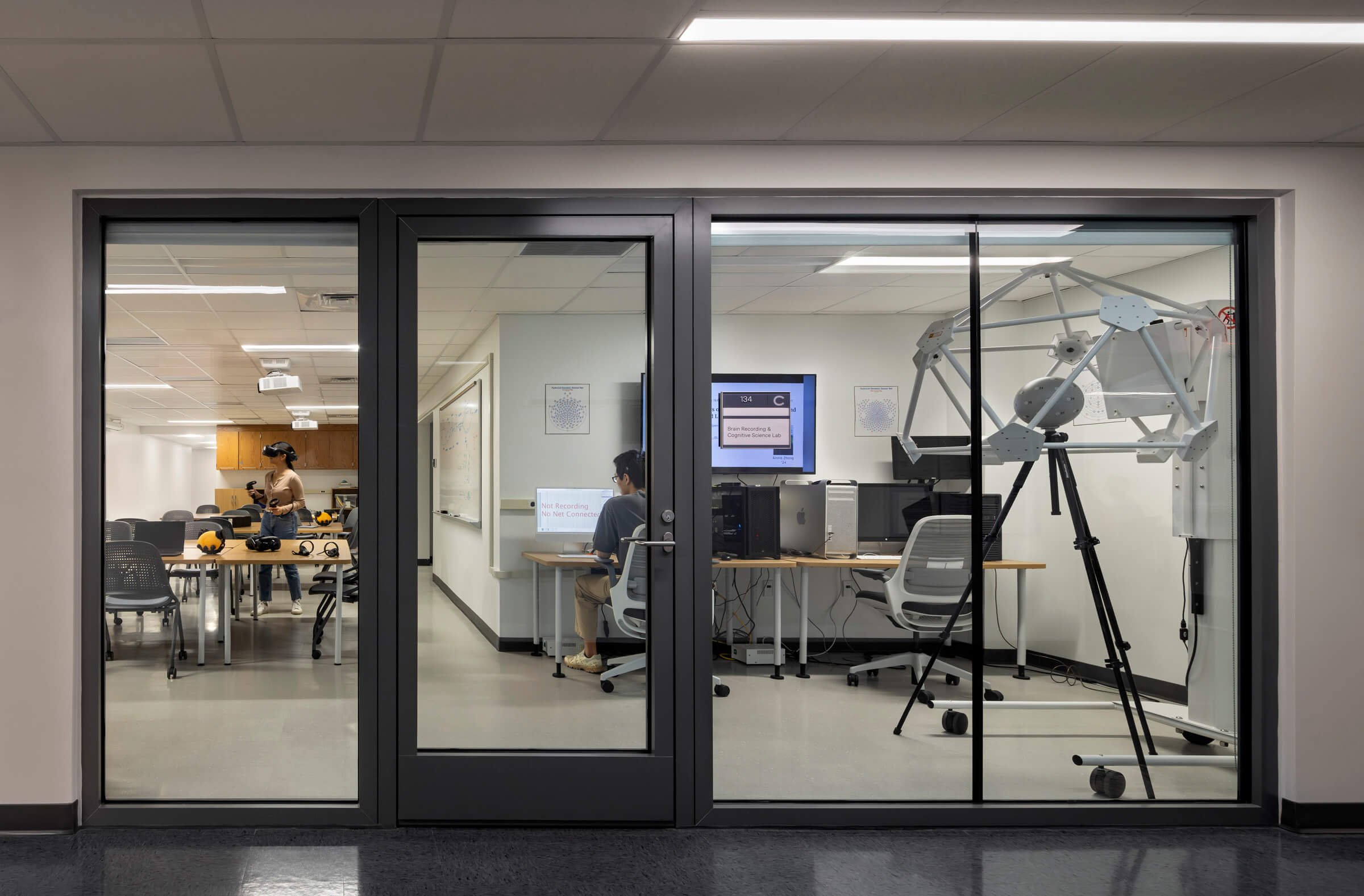
Olin Hall is home to the Robert H.N. Ho Mind, Brain, and Behavior Center, which bridges the natural and social sciences with humanities by leveraging cutting-edge technology. Incorporating glass-walled laboratories, the Center allows students and visitors to observe critical research in real time. It includes magnetically and acoustically shielded EEG laboratories and behavioral research suites equipped with observation rooms.
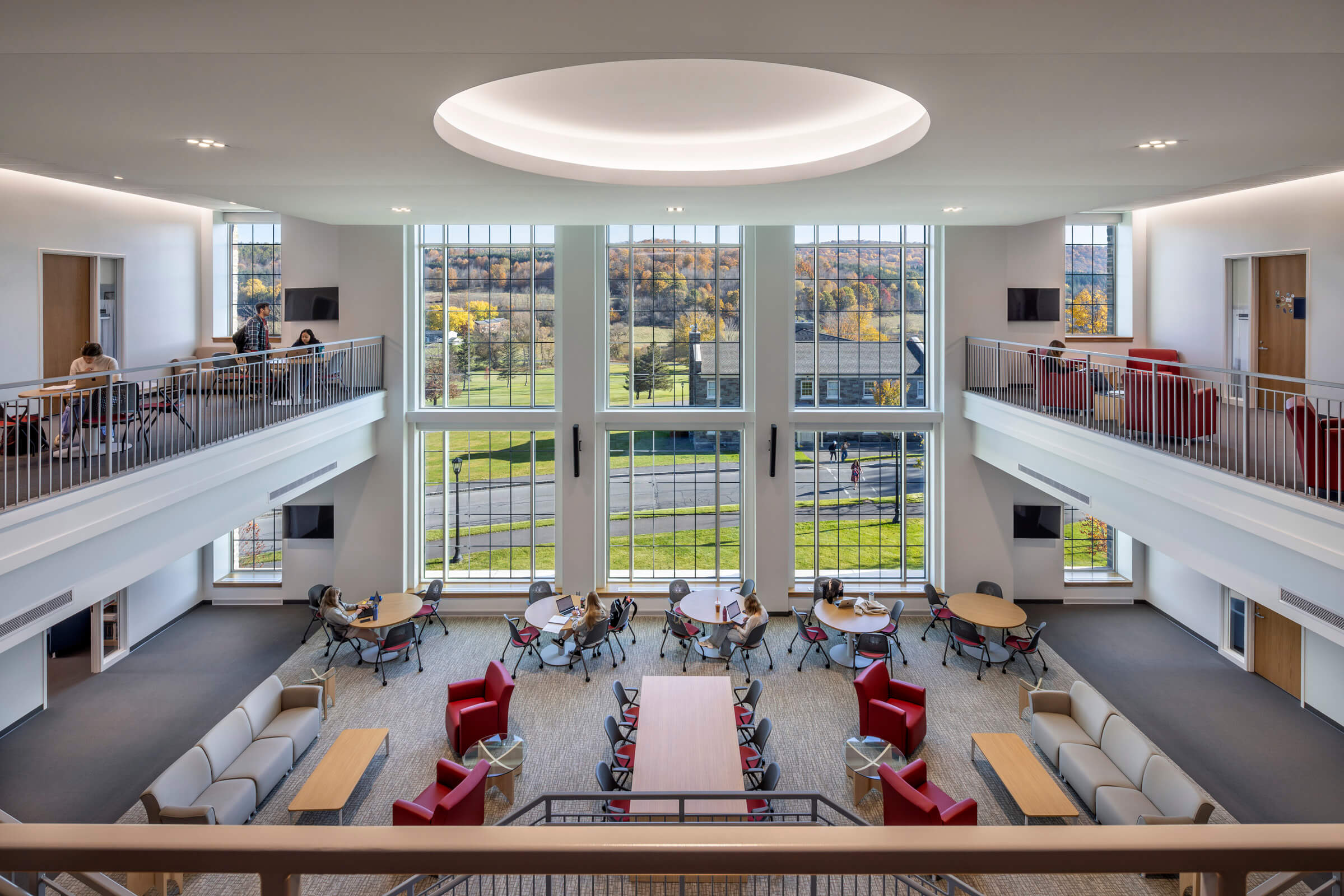
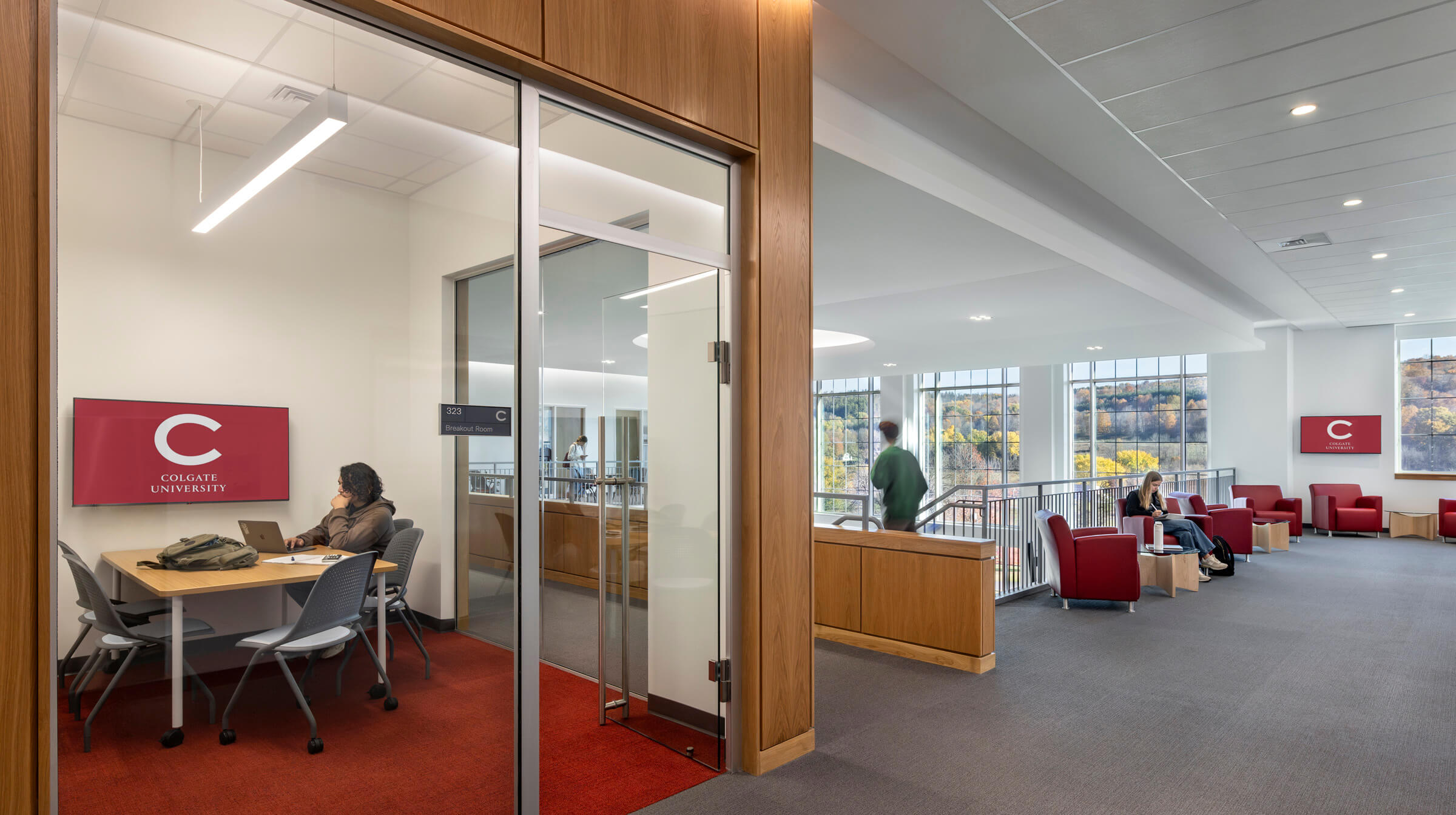
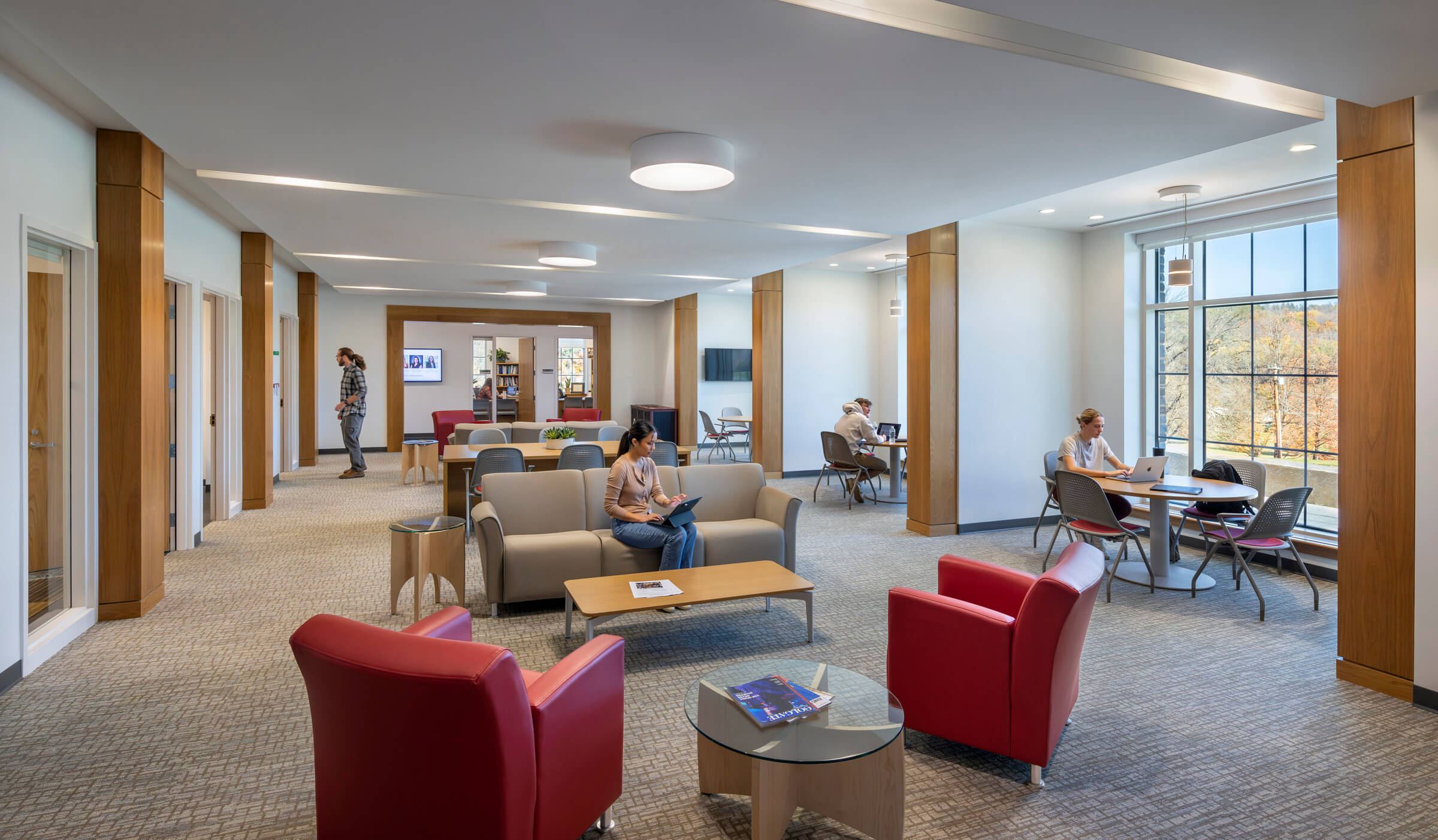
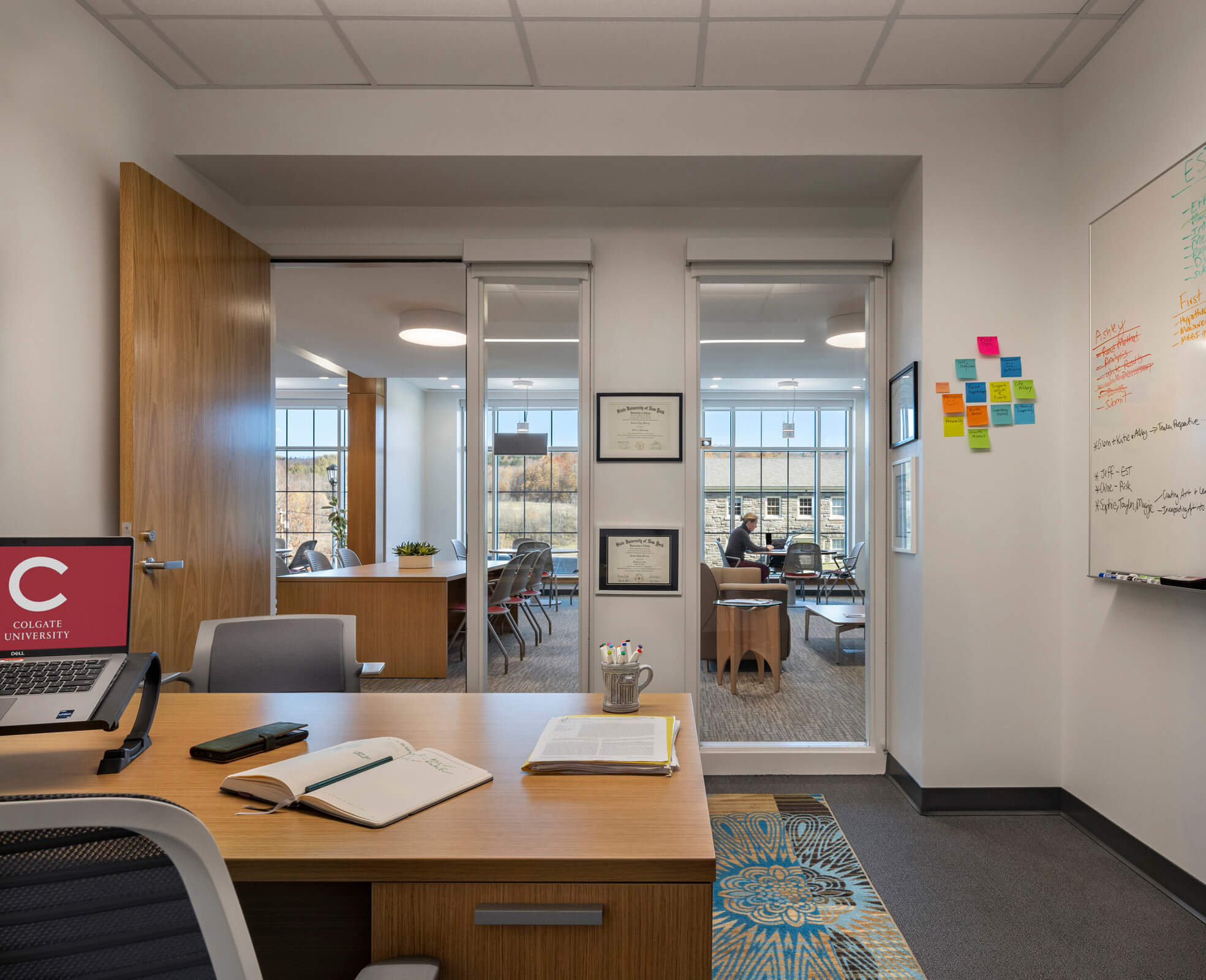
Faculty offices, once tucked away behind laboratories and inaccessible to students, now line a two-story central commons. Collaborative student spaces—including quiet study rooms specifically sized to enable future office conversion if needed—adjoin the faculty spaces, creating opportunities for informal conversations, quick check-ins, and mentoring. A dynamic cross-stair links the two levels of the commons, encouraging floor-to-floor interaction while offering views over the space below. At the ground level, new dedicated lounges allow students to meet between classes, connect with peers, or simply relax.
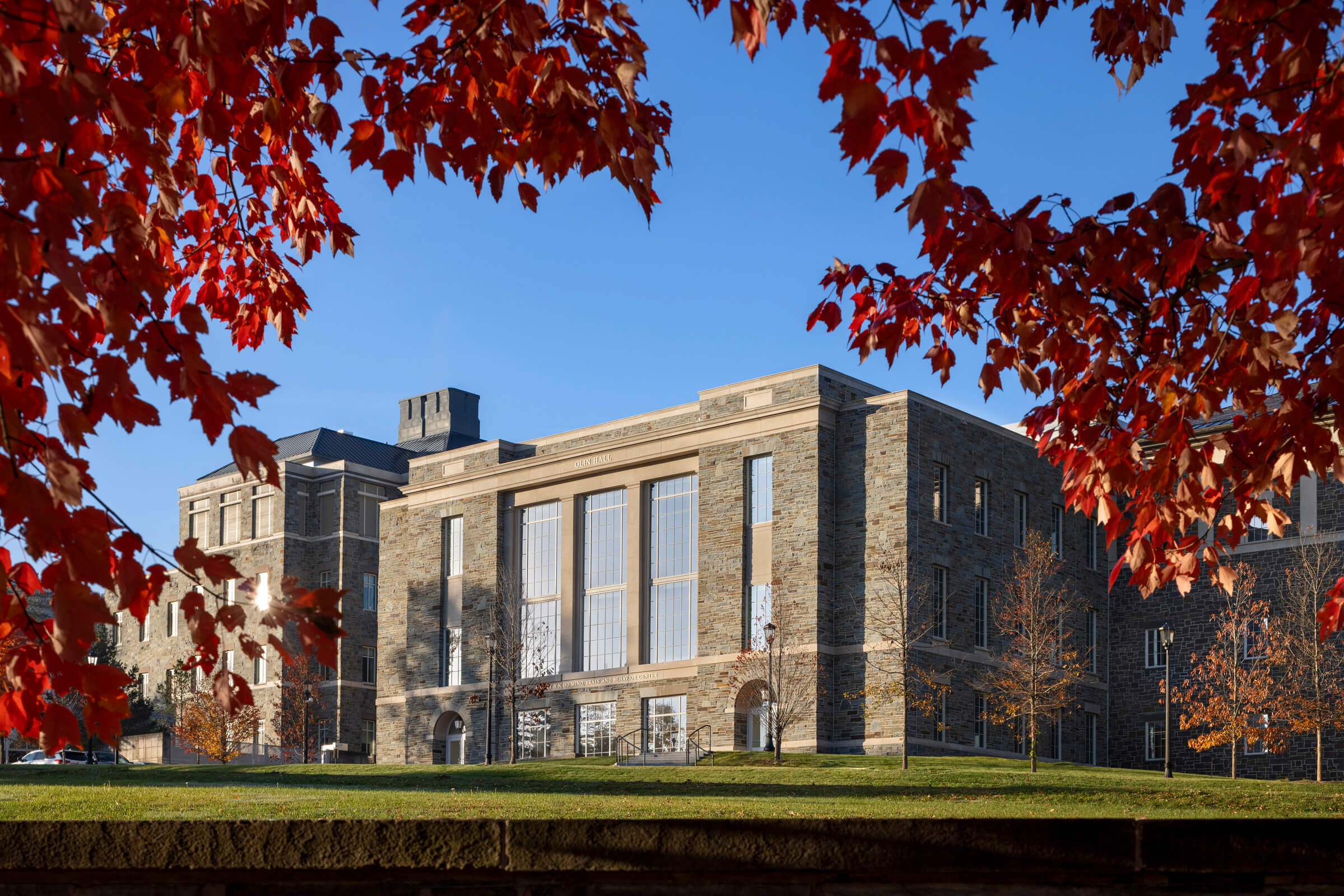
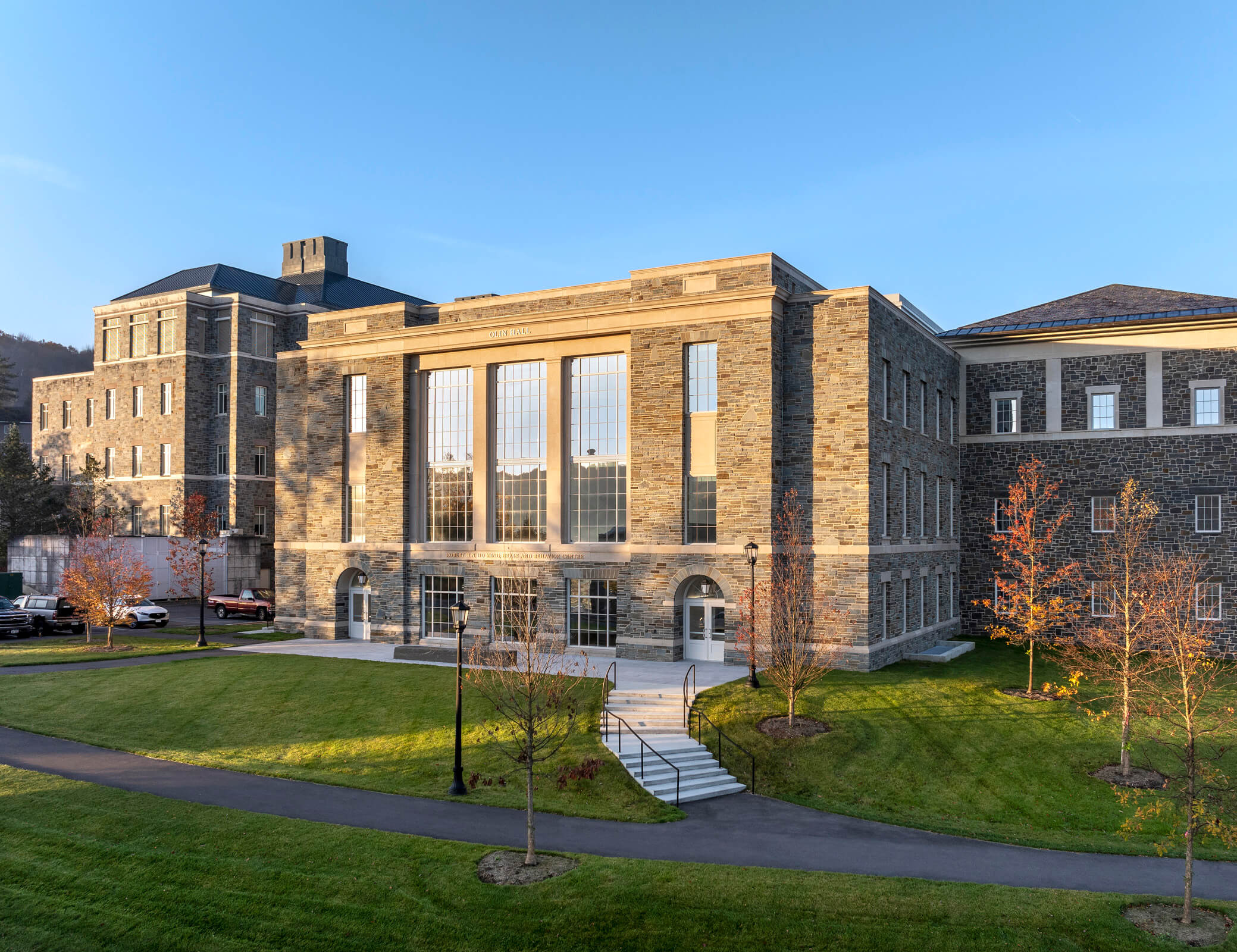
Olin Hall’s façade unites the distinct stone palettes of the adjacent Benton Hall and Ho Science Center into a cohesive whole, creating visual harmony along the western gateway to Colgate’s campus. Though the quarry that originally supplied the campus stone for nearby buildings had been depleted, stone with similar geologic origins was traced to a quarry in northern Pennsylvania. To achieve Olin Hall’s complementary stone palette, a series of large-scale mock-ups were created on site, with adjustments made for color and proportion, including the addition of larger mosaic pieces.