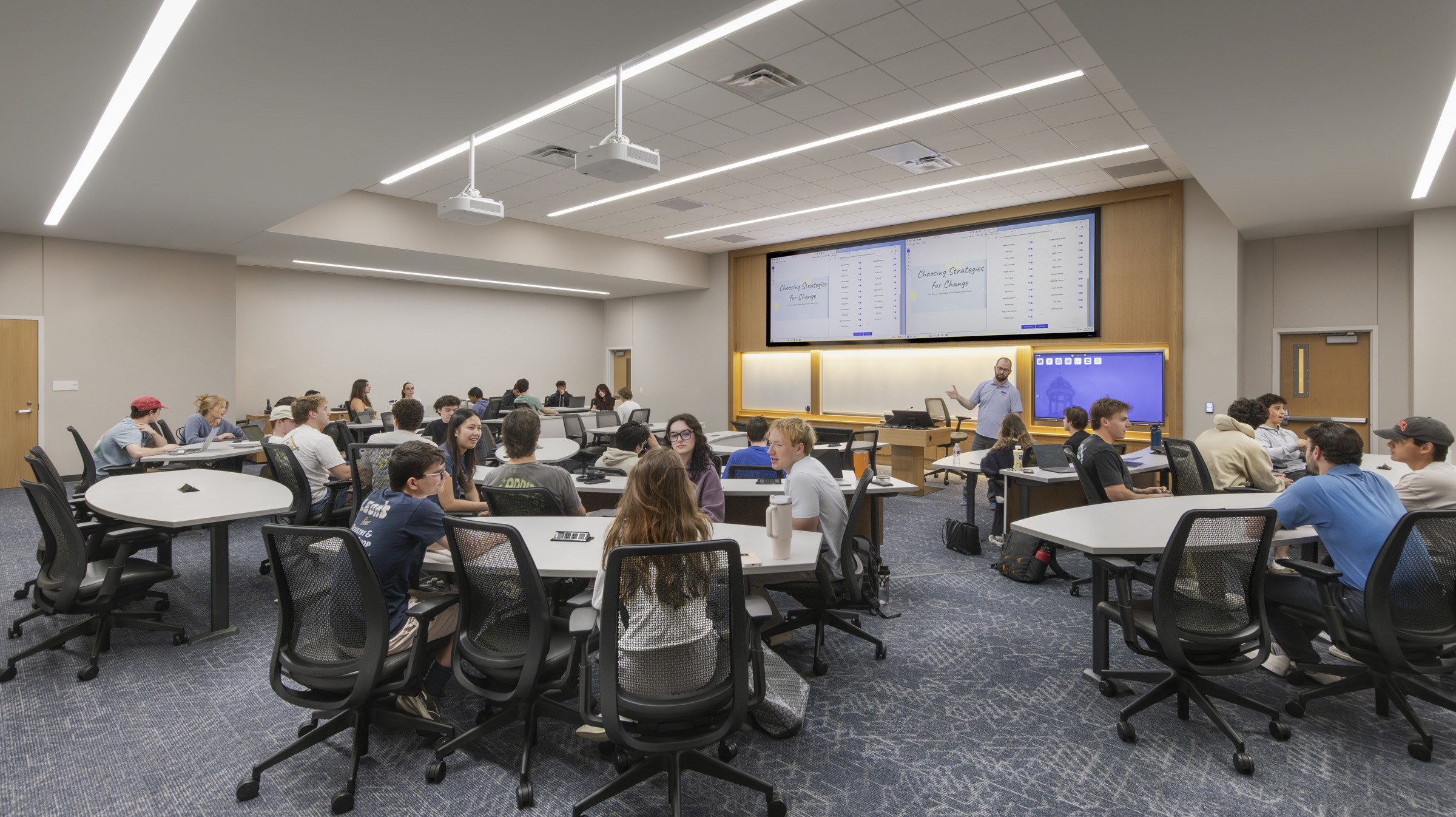
At the Cox School of Business, the Negotiations class meets in a cluster-style classroom. Photo: Francis Dzikowski | OTTO
Share this story:


How to Manage Classroom Design in the Age of AI
AI has unearthed questions about the future of education. If technology lets students engage with educational content on their own, what role does the classroom play?
Graham S. Wyatt
Higher education has entered another period of technological transformation, with the accelerating sophistication and accessibility of AI reshaping how students research, write, and study.
Approximately 90% of post-secondary students use AI tools to assist with coursework while higher education institutions are integrating AI across administrative, research, and instructional functions.
These rapid adaptations have, like during other times of pedagogical change, unearthed insecurities and questions about the future of education. If AI lets students engage with educational content on their own, what role does the classroom play?
This line of thinking misjudges the purpose of classrooms—and why universities have endured. AI is not the first technological revolution to have put classrooms to the test.
History shows that classroom design has evolved over time in ways that parallel or are independent from technological change. Let’s not allow technology to distract us from design fundamentals that are essential to high-functioning classrooms and the teaching and learning they support.
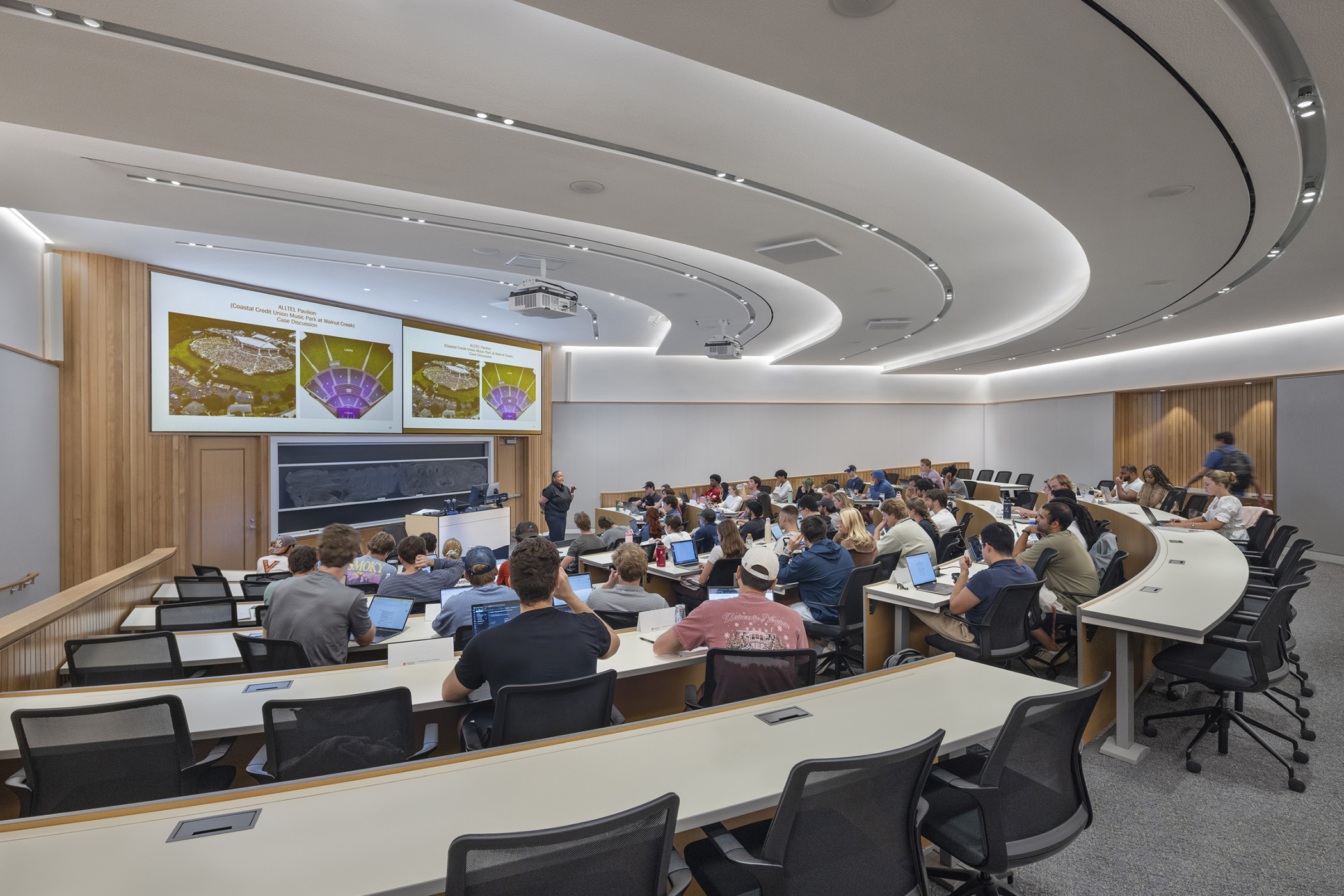
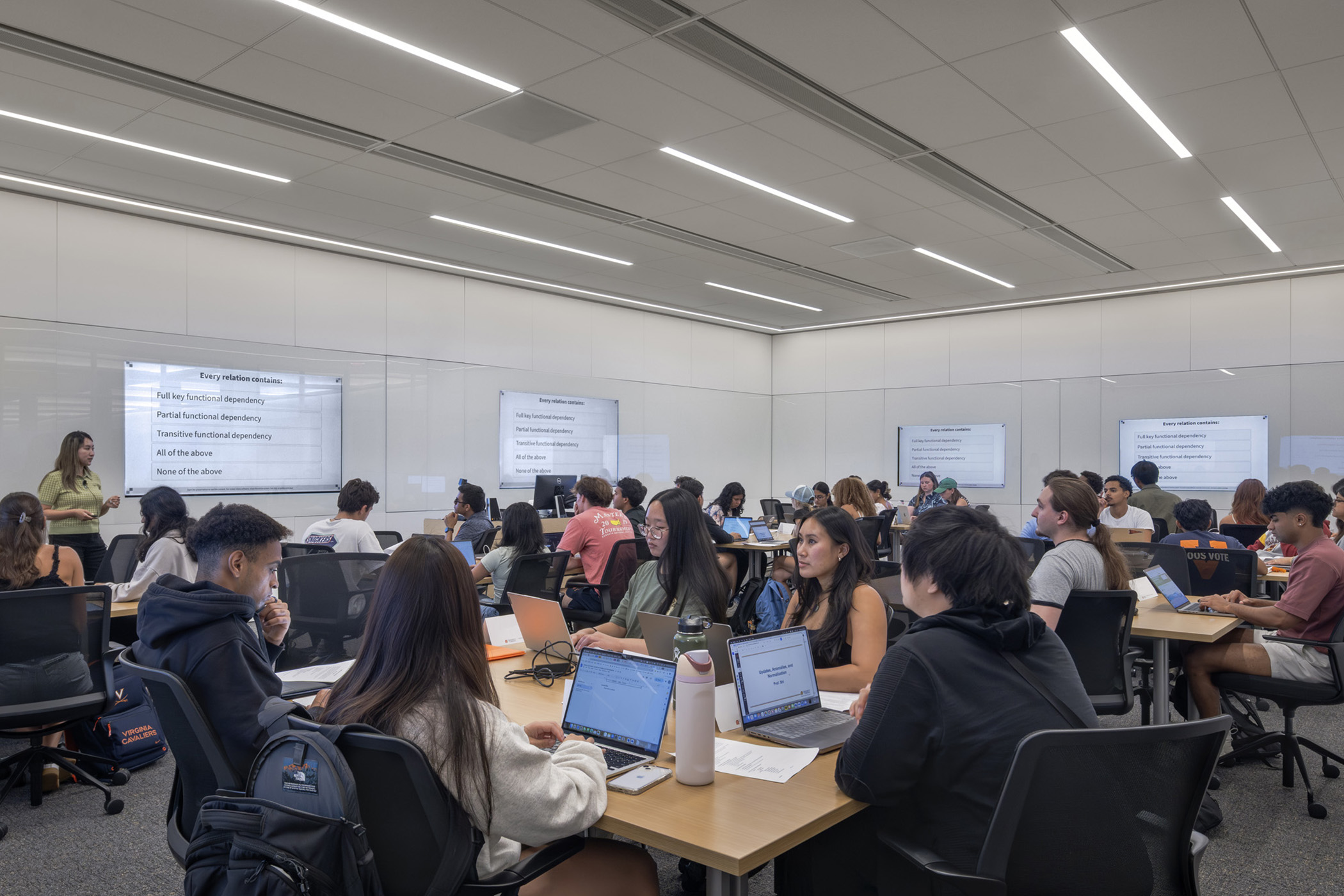
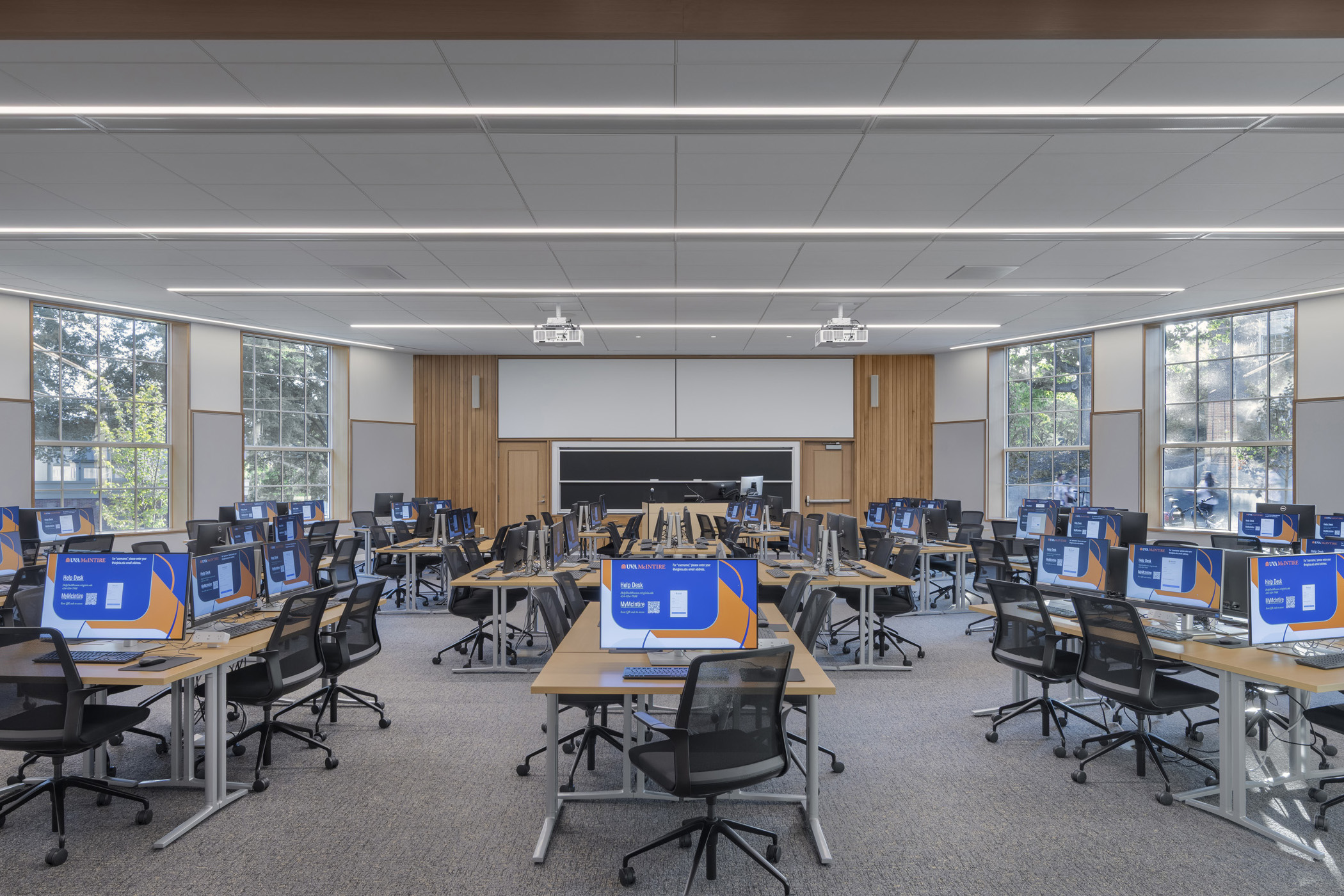
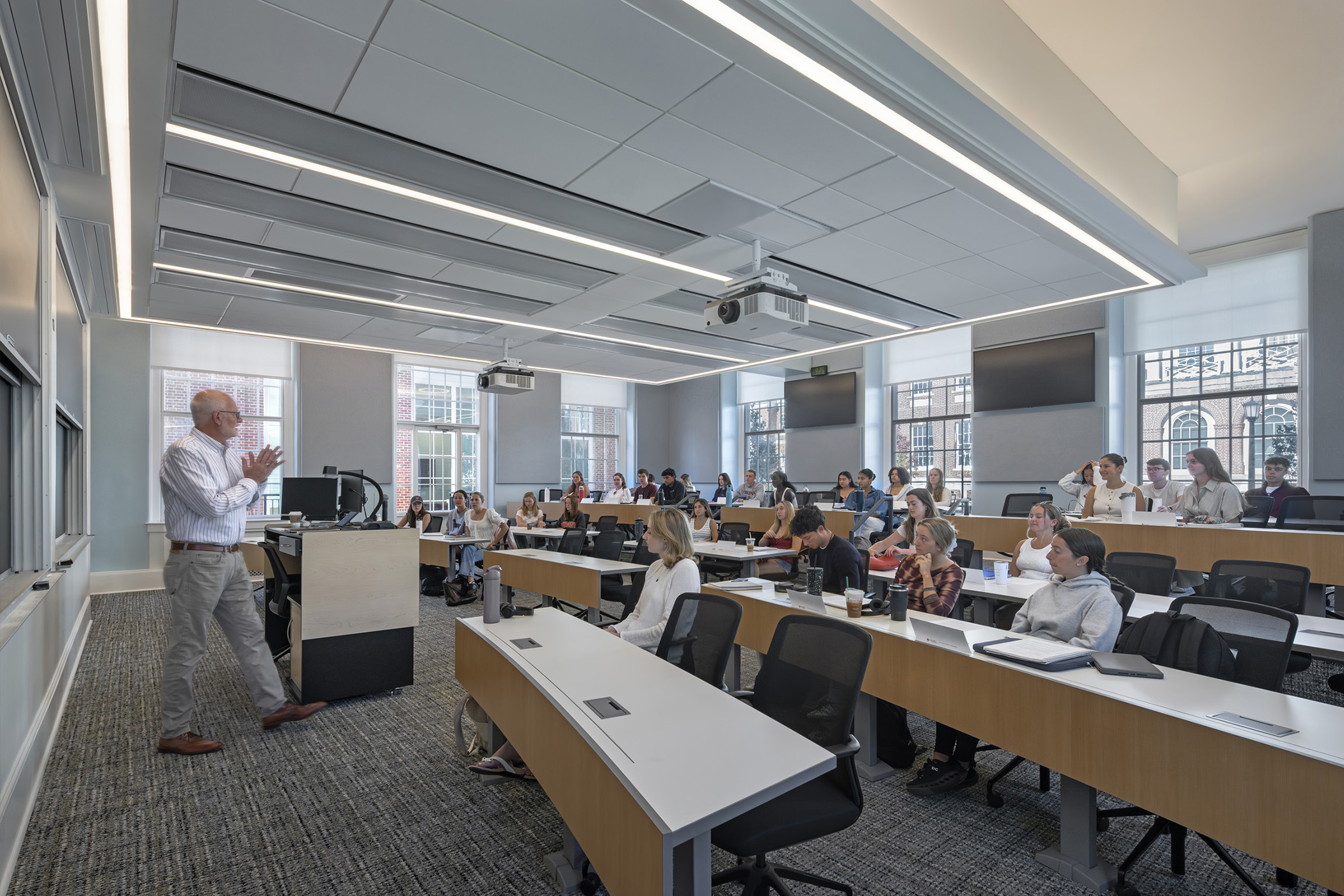
The McIntire School of Commerce at the University of Virginia includes a variety of active-learning classrooms. Photos: Francis Dzikowski/OTTO
Classroom design for non-technological functions
The physical classroom is not simply a technological construct but one built on social and human factors—a shared space that encourages student engagement, socialization, and collaboration.
In support of these non-technological functions classrooms must be designed with careful consideration given to sight lines, acoustics, furnishings, and comfort. They must channel attention, reduce competing stimuli, establish a rhythm of focused listening and discourse, and communicate seriousness of purpose.
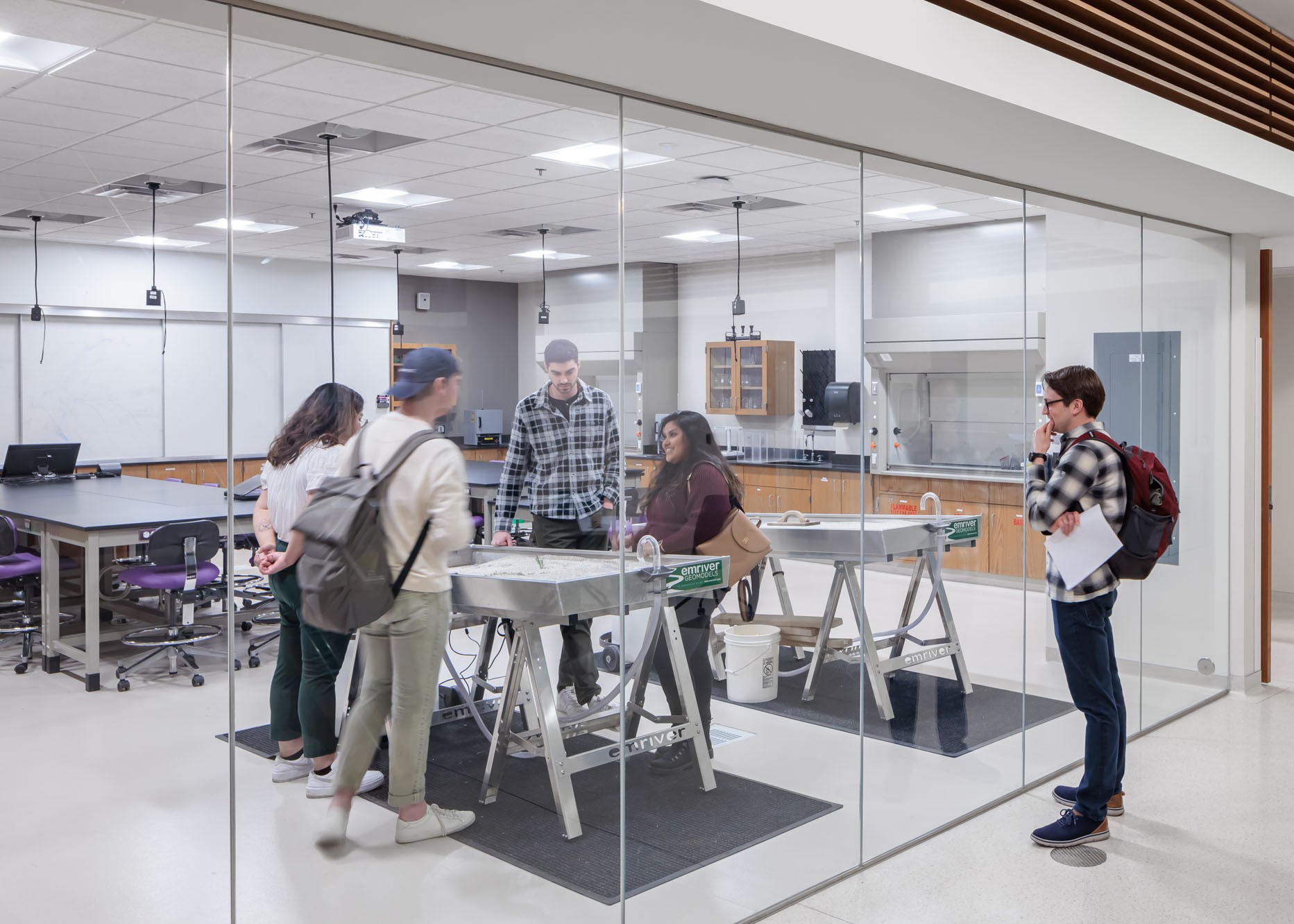
Even the large-scale pivot to fully virtual learning during the COVID-19 pandemic—arguably the most comprehensive stress test of physical educational facilities in modern history—underscored that digital platforms cannot replicate the value of a thoughtfully designed classroom.
Fundamentals are important. More classroom space per student is rarely desirable—the best classrooms are compact and intimate bringing students and instructors in close contact with each other.
Multipurpose often means that no purpose is supported optimally. Academic institutions and the designers who serve them must be explicit about each classroom’s target audience—rather than pretending that one design fits all.
Nonetheless, most well-functioning classrooms generally accommodate both didactive and interactive teaching and learning methods and achieve this with designs that do not unrealistically assume that furniture must be rearranged between classes.
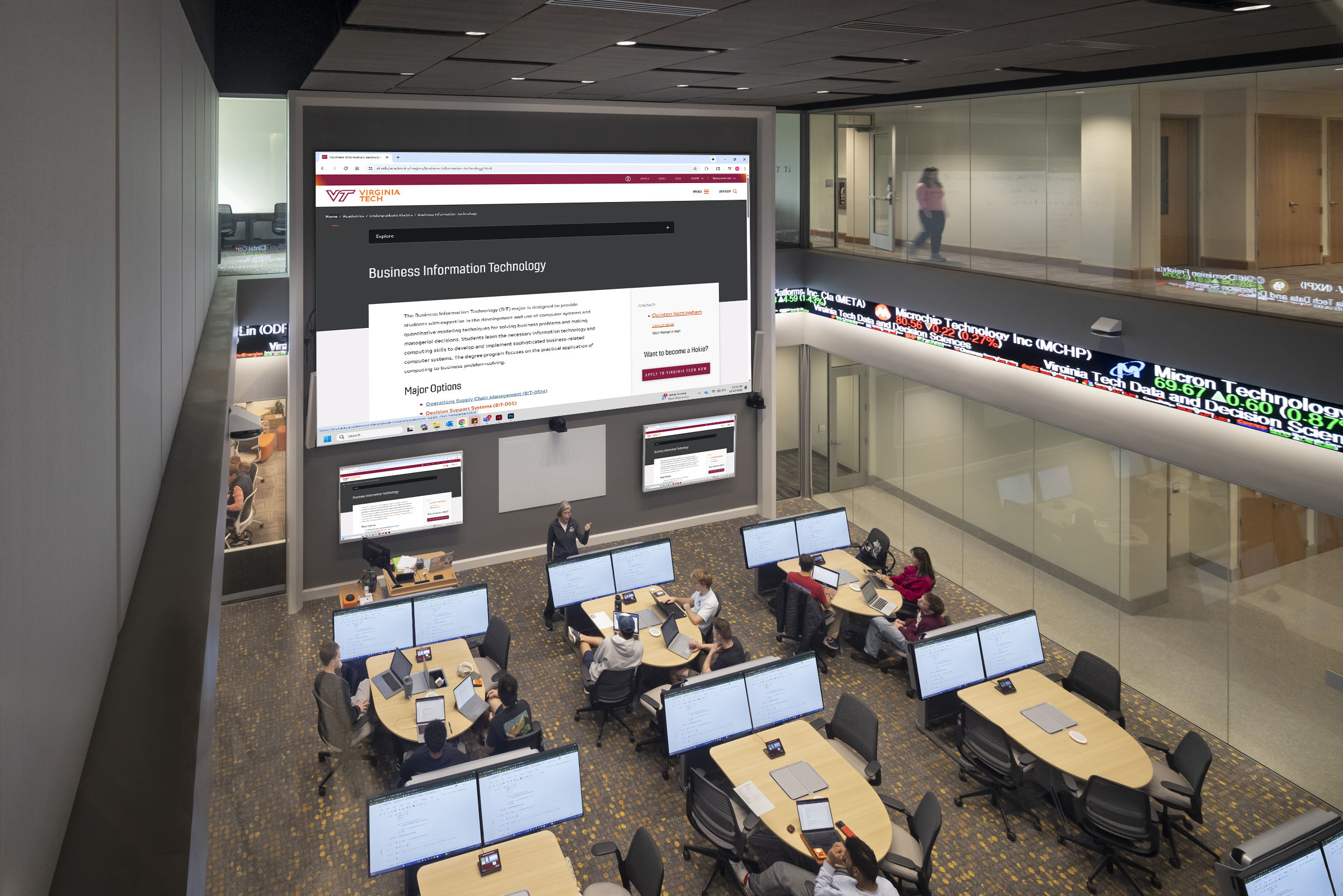
Attention & focus
Lighting and acoustics continue to dominate as key classroom design considerations.
Classroom lighting should establish visual hierarchy and deliver light where needed, especially desktops and presentation surfaces. Multiple-mode operability, simplicity, and ease of use are essential lighting design considerations.
As classroom acoustic requirements have evolved, sound-stage quality performance is important, particularly in classrooms intended to support remote or hybrid learning. Optimized acoustic performance costs little for the benefit achieved.
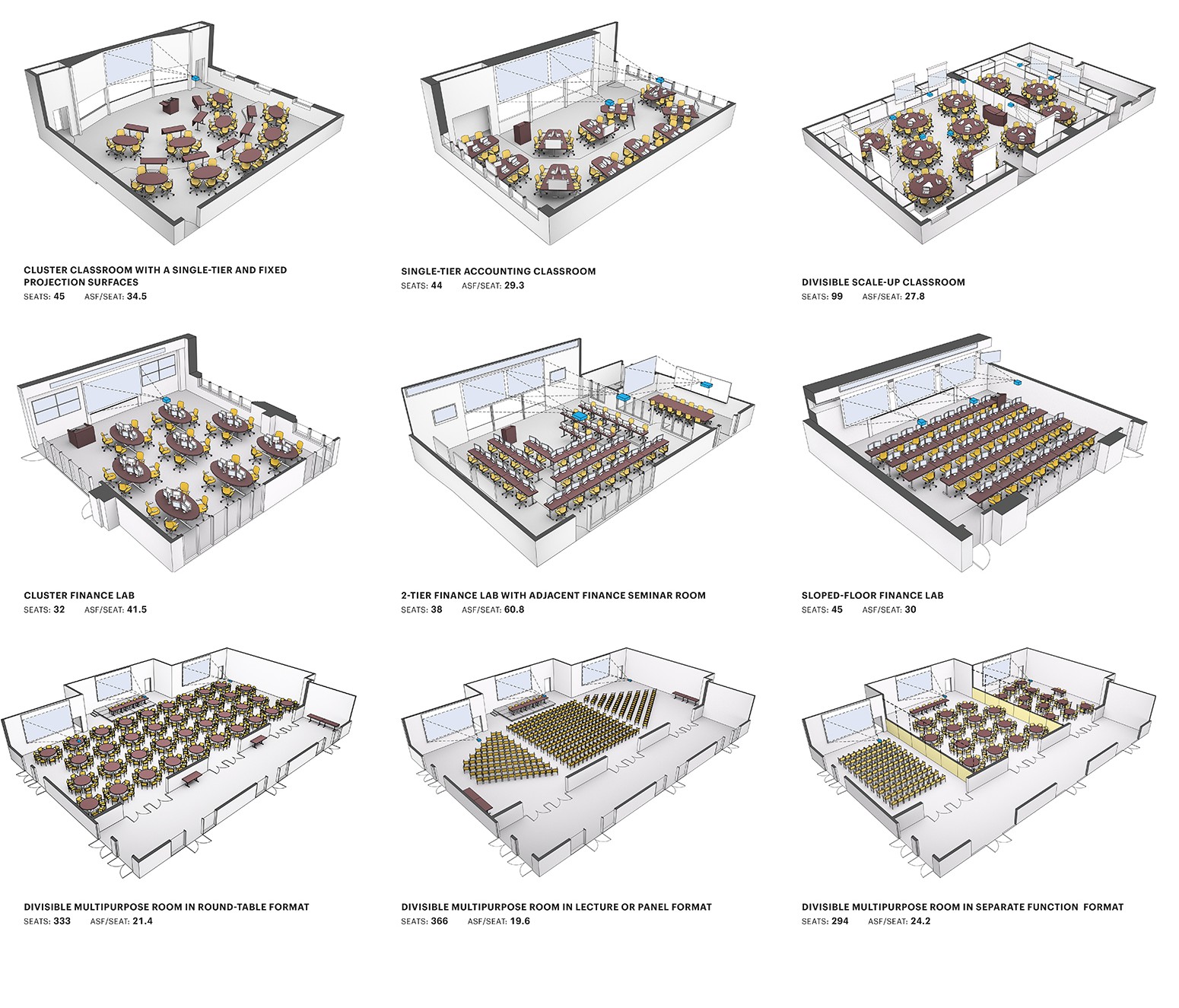
Varieties of classroom types. (RAMSA)
Purpose-fit design and specialized spaces
In the "Academic Buildings and Professional Schools" chapter of Building Type Basics for College and University Facilities, I wrote about the varieties of learning spaces, including flat-floored classrooms, auditoriums, case study, cluster, and flexible, active-learning classrooms.
Institutional stakeholders and architects must collaborate and clarify each classroom's purpose, program, and target audience. Divisible "multipurpose" classrooms remain popular for flexibility and adaptability, but risk serving no function well. Most high-functioning classrooms accommodate one or two pedagogical modes at most.
Beyond classrooms, appropriate teaching and learning environments increasingly include specialized spaces designed to support specific disciplines. AI can generate a lab report, but it cannot replicate the bench work, equipment, sensory feedback, and supervised practice a well-designed lab delivers.
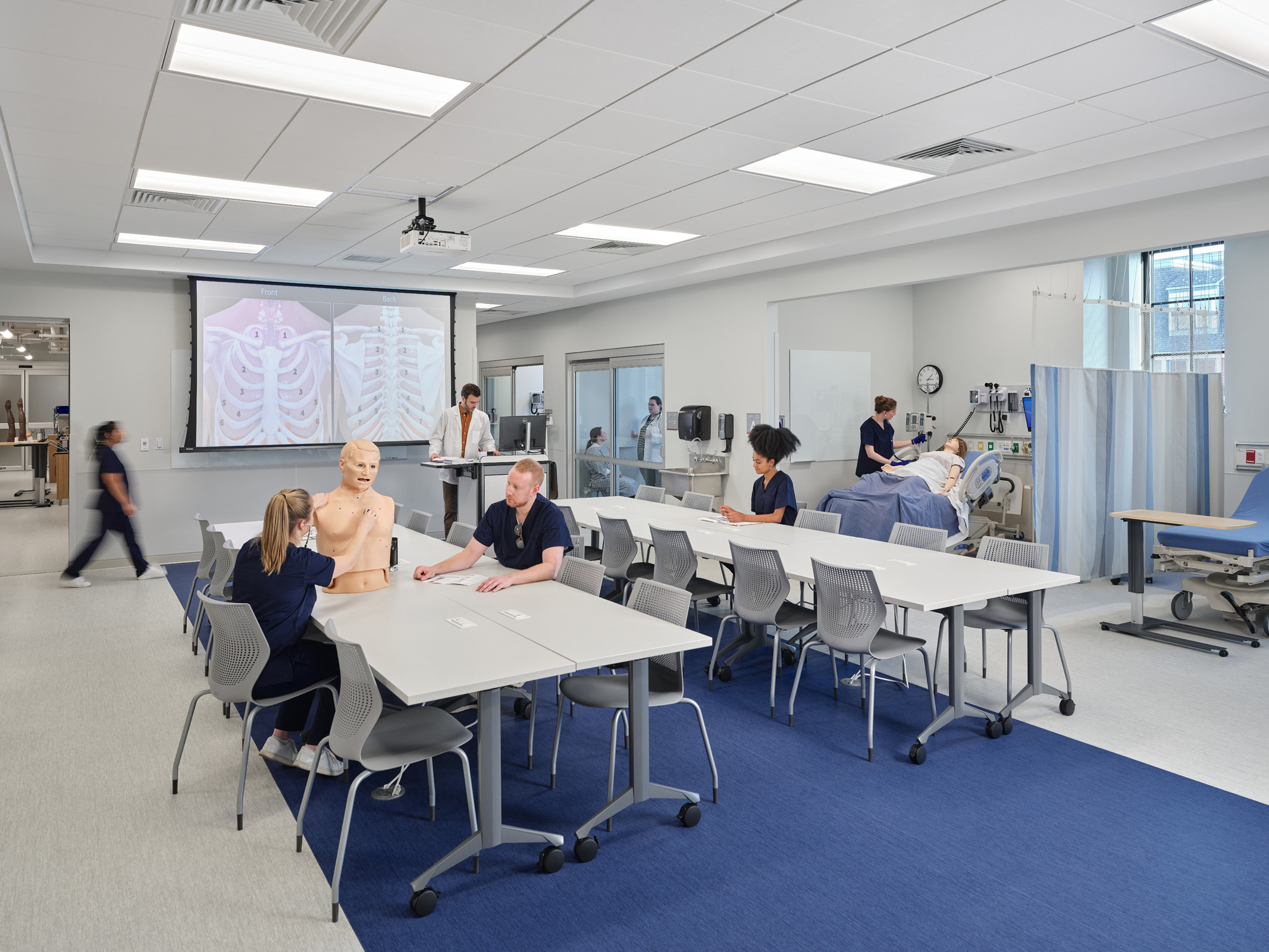
Specialized learning spaces, such as the high–tech clinic classroom at The Catholic University Conway School of Nursing, utilize technology in conjunction with hands-on experience in ways that can't be replicated by digital platforms. Photo: Keith Isaacs
Community-building common spaces
To support the social aspects of education, academic buildings need a variety of collegial common spaces located near classrooms. Large and small, active and quiet, lounge or study furniture: the quantity, type, and design of social and interactive spaces support individual and team work across the arc of the day, often extending conversations initiated in the classroom.
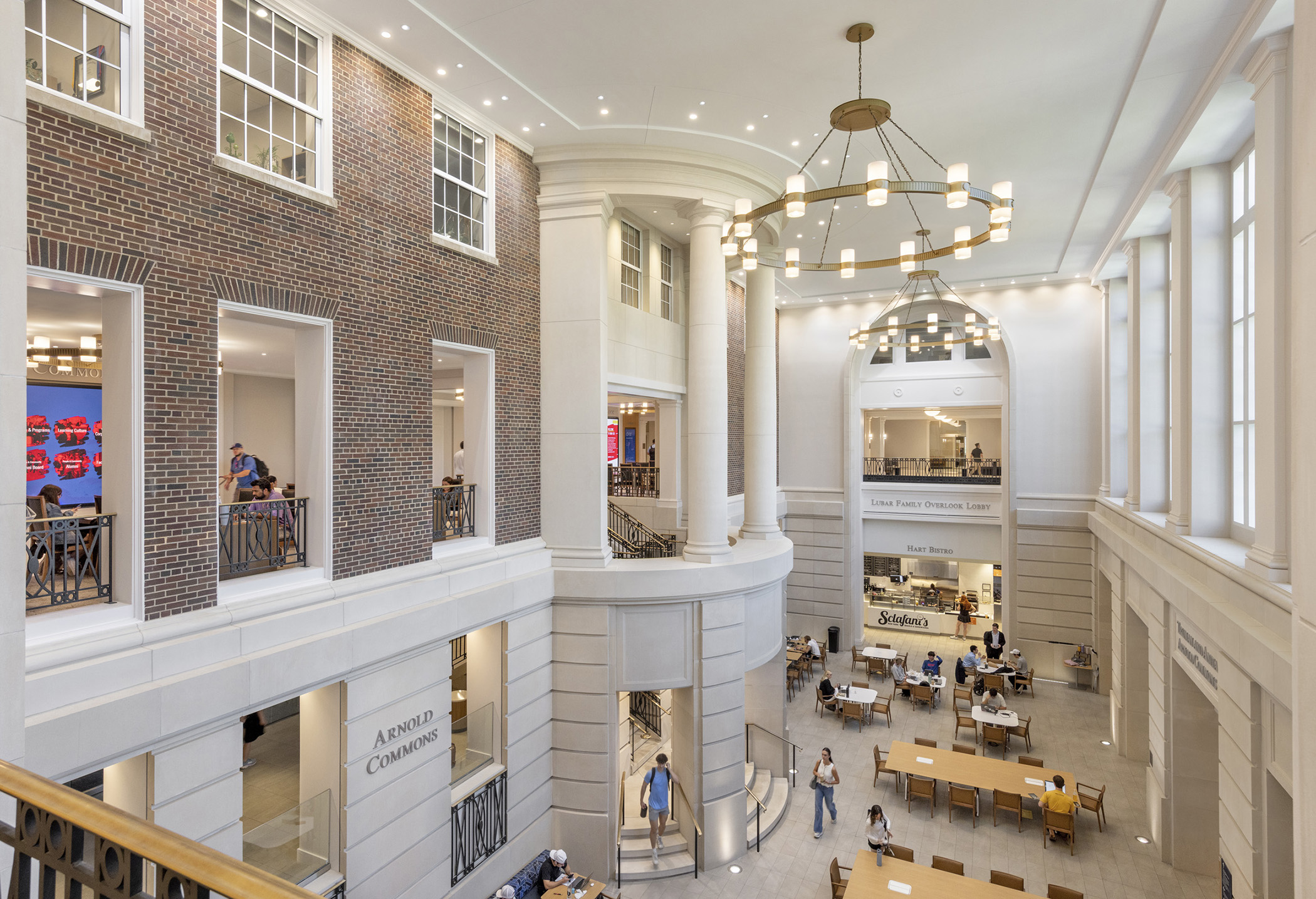
Designed to support in-person interactions, the Arnold Commons at The Cox School of Business offers study spaces, a bistro, and ceremonial connections at the heart of the complex. Photo: Francis Dzikowski | OTTO
Tradition and innovation
These and many other human factors must be considered during the planning and design of teaching and learning spaces. The most effective classrooms are not driven by technology, but by how their occupants—students, faculty, guests—interact within them.
AI may be the topic of the moment, but it is simply the latest transformation in the way academic communities teach, learn, and collaborate.
Like previous technologies, AI changes the ways students read, write, code, calculate, and present. But the lessons of every prior technological shift (the printing press, the personal computer, the pandemic-era pivot to remote interaction) each teach us that the tools for producing and delivering content will change faster than a building can be designed and built. Architects should not design for a technology that will be obsolete before occupancy; those who invest in fundamentals will have built something durable regardless of what comes next. That is where our attention belongs.
This article previously appeared in University Business on July 14, 2026.


