Alabama State House
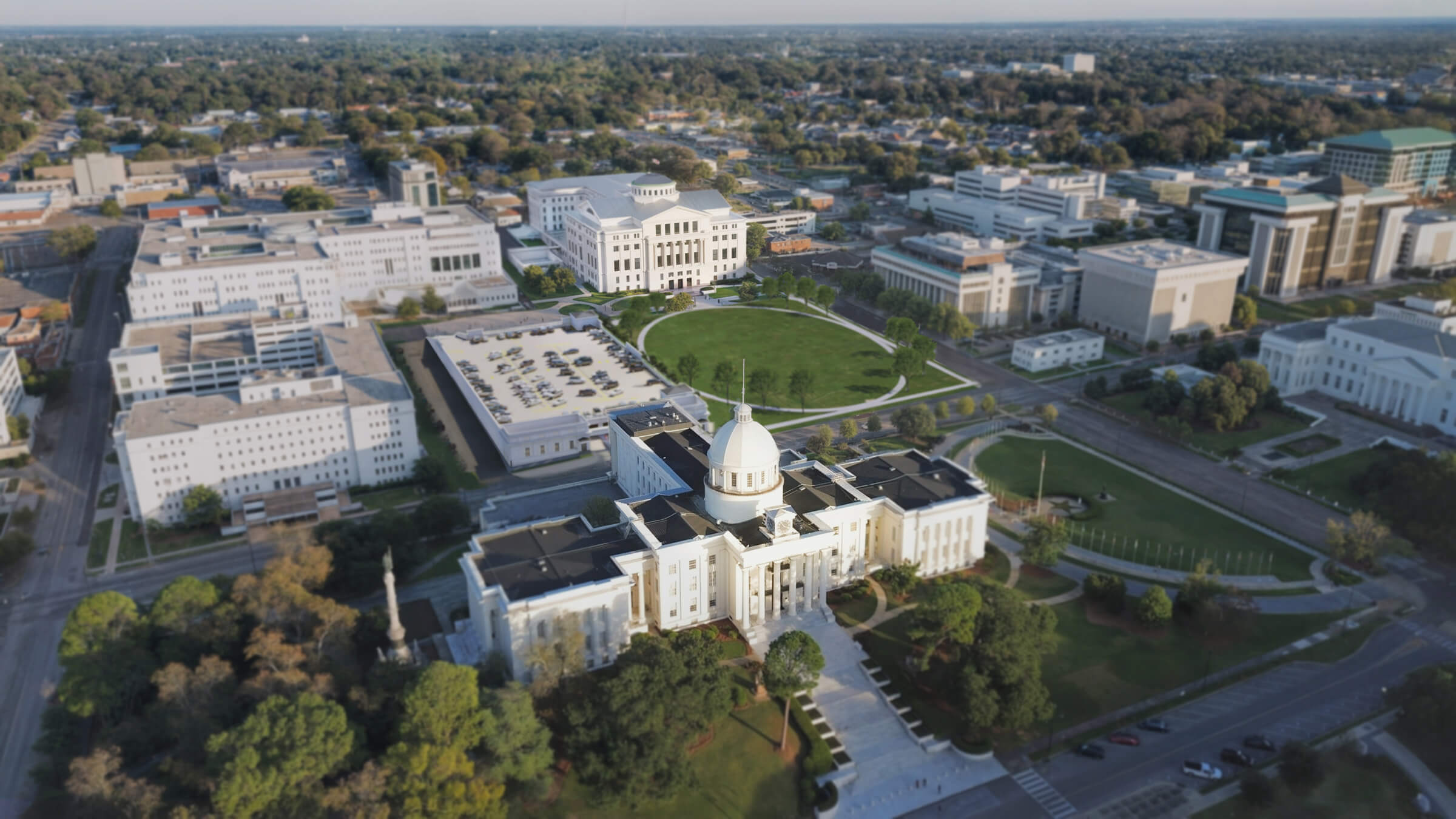
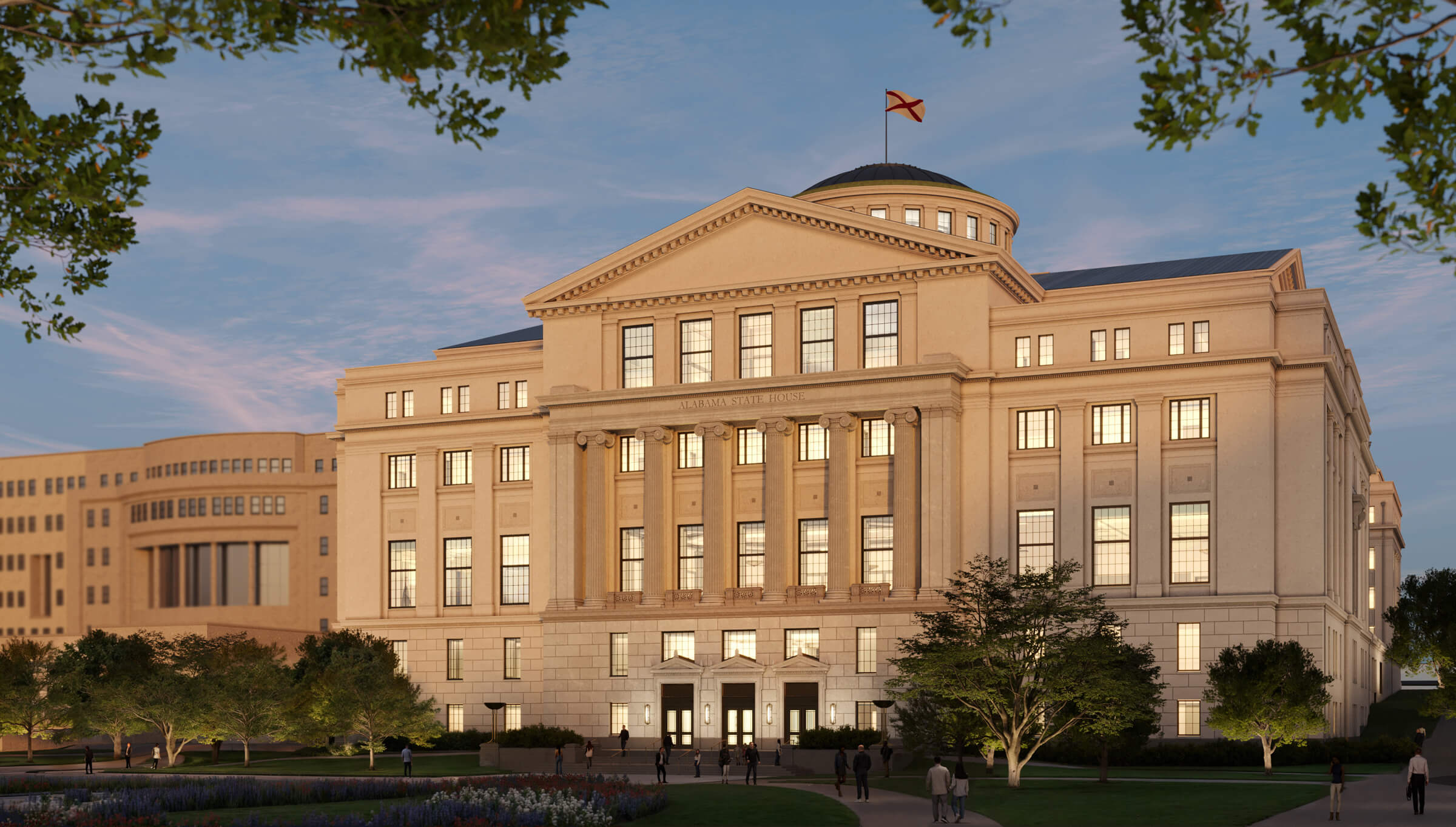
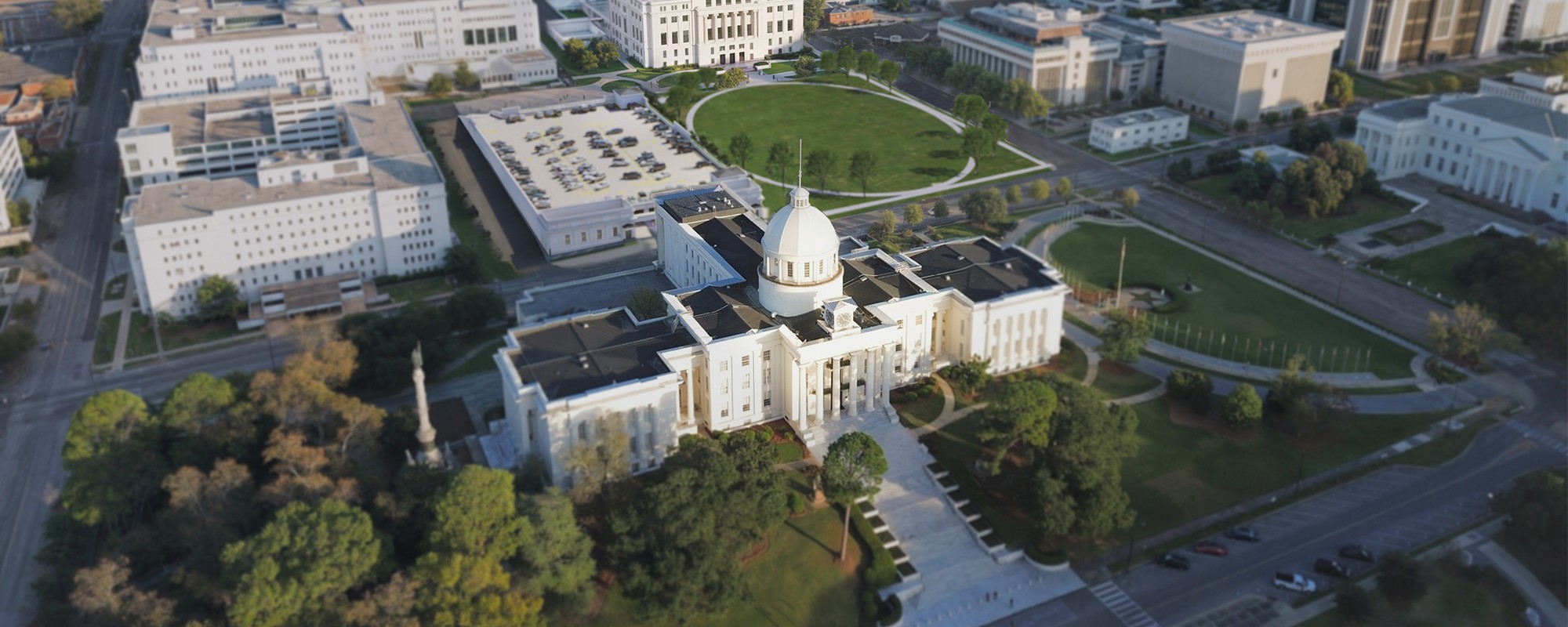
The new Alabama State House replaces the outdated current facility and reimagines the site as a civic park that extends to the nearby 1851 State Capitol.
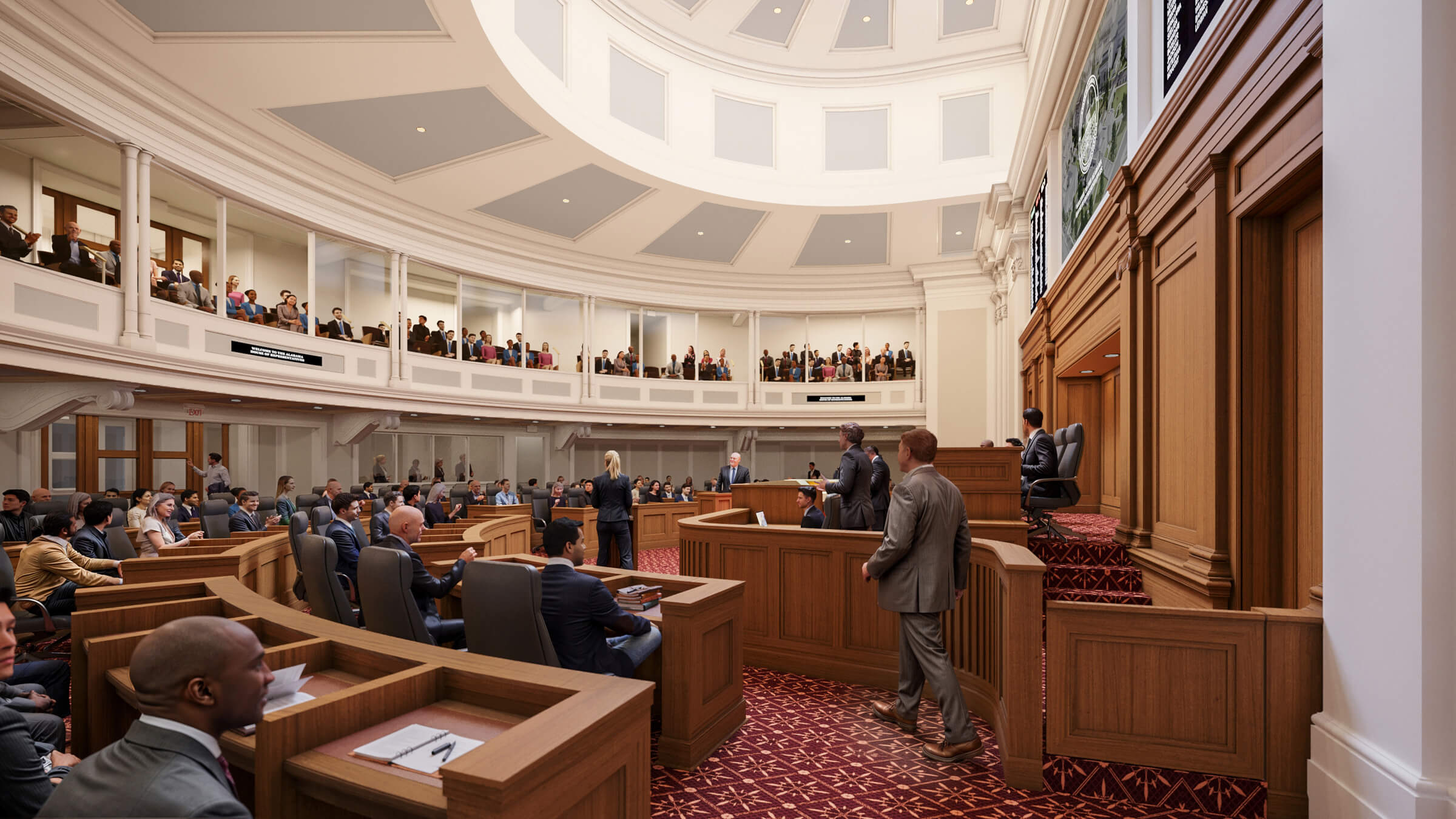
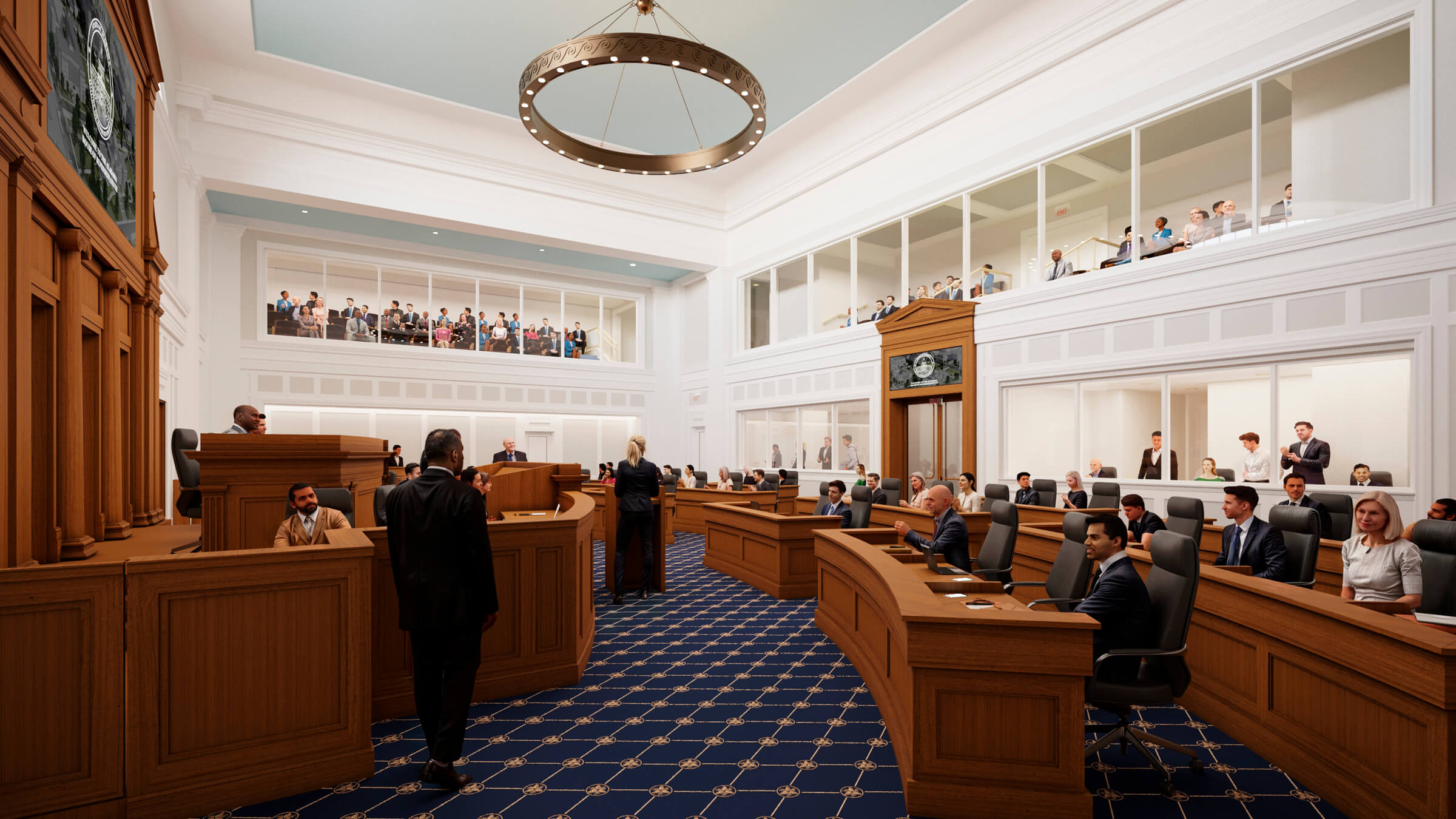
Designed in collaboration with Montgomery-based Goodwyn Mills Cawood (GMC), the new Alabama State House is a highly functional legislative hub for contemporary governance, addressing the limitations of the existing facility built in 1963 as the Alabama Highway Department headquarters and repurposed in 1985. The new program includes spacious chambers for the House and Senate, enlarged committee rooms, and offices for legislators and executive leadership—including the Governor and Lieutenant Governor—along with essential support spaces that enhance functionality, security, and operational efficiency while enhancing public accessibility and engagement.
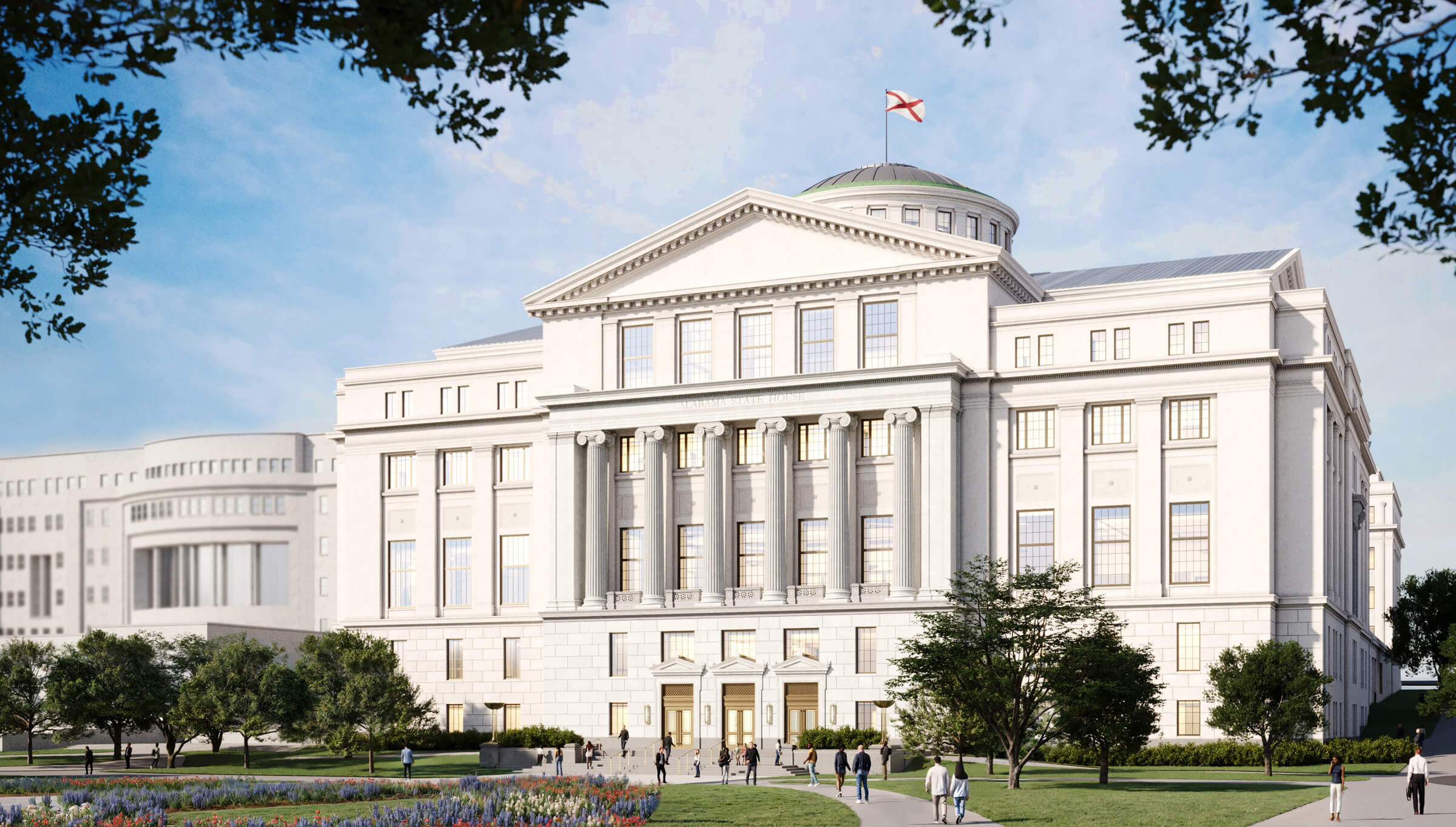
Architecturally, the new State House references the historic State Capitol’s form and proportions, the organization of its chambers, the rhythm of its columned portico, and the Greek Revival detailing characteristic of Montgomery’s Capitol District, while orienting key spaces—committee rooms, leadership offices, and public gathering areas—toward views of the Capitol. The western half of the new building is organized along a central spine of stacked, multi-level public spaces that provide access to committee rooms and both legislative chambers. It is anchored by a central atrium with a monumental stair connecting the first three floors and adjoining naturally lit pre-function areas. Beneath the dome, a double-height rotunda provides a clear point of access to both chambers and their public galleries. The House and Senate chambers occupy the same floor, with their daises facing one another across the rotunda to symbolically reinforce the critical exchange between the two legislative bodies. Legislative offices and support staff are situated in the eastern half of the building, with House offices on the third and fourth floors and Senate offices on the fifth.
Drawing on the region’s traditional architectural heritage, the new State House blends the language of historic stucco-clad masonry structures with contemporary massing and detailing. Its calm, ordered composition conveys dignity and permanence, while its restraint ensures a complementary relationship with the historic State Capitol.
completion
Project Partners